
I remember one specific Monday three years ago when I couldn’t even turn my head to check my blind spot while pulling out of the driveway. It felt like my cervical spine had been replaced by a rusted iron bar overnight. I’d spent the whole weekend ‘relaxing,’ so I couldn’t understand why I was in more pain than I was on Friday afternoon. I did what most of us do: I grabbed my chin and tried to force a pop, but I’ve since learned that the truth about cracking your own neck at your desk is that it usually just creates more hypermobility where you don’t need it while leaving the real problem stuck. Today, I’m going to show you why that ‘Monday morning neck’ isn’t a fluke and how you can break the cycle of starting every week in a flare-up. Have you ever felt like your body actually punishes you for taking a break over the weekend? Let me know if this sounds like your typical Monday.
The Weekend Trap You Didn’t Realize You Were Falling Into
Most of us blame our pillows or a drafty window, but the real culprit is usually the drastic shift in how we move—or don’t move—between Saturday morning and Sunday night. We go from the dynamic movement of the work week to what I call ‘the recovery slump.’ According to a study published in the Journal of Physical Therapy Science, prolonged static postures, especially those involving forward head lean during screen time, can lead to significant muscle fatigue and increased pressure on the intervertebral discs. This is exactly what happens when we spend Sunday evening binging a new show on a soft couch. I made the massive mistake early on of thinking I could just stretch my way out of this on Monday morning, but I quickly found out why your morning stretches might be making your back more sensitive when the area is already inflamed. Instead of relief, I was just tugging on angry nerves.
Is it really possible to fix this without a new mattress?
I get the skepticism; it feels like the pain is so deep that only a thousand-dollar memory foam setup can save you. But the truth is, your neck isn’t stiff because of your bed; it’s stiff because your nervous system is trying to protect a joint that felt unsupported all weekend. We need to look at things like the exact height your armrests should be for neck health and how your ‘rest’ positions are actually taxing your upper traps. When we understand the science behind chiropractic adjustments for back pain relief, we see that restoring proper motion to those locked-up segments is way more effective than just buying a firmer pillow. We’re going to dive into the specific movement patterns that keep your neck from seizing up before your first cup of Monday coffee.Think of your neck like the top of a Jenga tower. If the blocks at the bottom—your mid-back and pelvis—are shifted or stiff, the top block has to tilt just to stay balanced. This constant micro-compensation is why how a misaligned atlas causes chronic migraines is a reality for many; it’s rarely just about the neck itself. To fix that Monday morning ‘rust,’ we have to stop treating the neck as an isolated part of the body.
Fix the Foundation of Your Thoracic Spine
If your mid-back (the thoracic spine) is locked up from a weekend on the sofa, your neck is forced to do double duty. Most people try to stretch their neck side-to-side, but that’s like pulling on a knotted rope. Instead, you need to introduce extension into your mid-back. I remember a particularly brutal Monday when I was presenting to a new client and realized I couldn’t look at the screen and the audience at the same time without rotating my entire torso like a robot. I spent my lunch break using a firm water bottle as a makeshift roller against a wall to pin my shoulder blades back. It was messy and slightly embarrassing, but that simple decompression gave my nervous system enough ‘slack’ to let my neck muscles finally stop guarding. You can achieve this more gracefully by learning how to use a lacrosse ball for better thoracic mobility to target the tissue that’s actually pinning your shoulders forward.
The 10-Second Reset That Actually Sticks
You don’t need a 30-minute routine; you need frequent ‘neurological interruptions.’ When you sit for more than twenty minutes, your brain stops ‘sensing’ your posture and starts accepting the slouch as the new neutral. To break this, perform the 10-second posture reset you can do at your desk. Gently tuck your chin—think of making a double chin rather than looking down—while simultaneously pulling your shoulder blades toward your back pockets. This isn’t about ‘sitting up straight’ through brute force; it’s about reminding your deep neck flexors that they have a job to do.
Stop Over-Stretching the Wrong Muscles
One of the biggest mistakes I see is people aggressively stretching their upper traps when they feel a ‘knot.’ In reality, those muscles are already overstretched and weak because your head is hanging forward. Tugging on them more just makes them tighter as they fight back to protect your nerves. If you want to know how to fix rounded shoulders from years of desk work, you have to strengthen the back, not just stretch the front. If you are in the middle of an active flare-up, you need to understand the truth about heat versus ice for neck stiffness. While ice can numbing the area, heat is often the better choice for the ‘Monday morning’ type of stiffness because it encourages blood flow to those ‘cold’ and dormant muscles. Furthermore, learning how to adjust your monitor to stop daily tension headaches ensures that once you’ve reset your spine, you aren’t immediately falling back into the same mechanical trap that caused the issue in the first place.
We often fall into a dangerous trap: assuming that a ‘tight’ muscle is always a ‘short’ muscle. In my experience with complex sports rehab, I’ve seen hundreds of people aggressively yank on their upper traps or hamstrings, only to find the tension returns with a vengeance within thirty minutes. This is because many of those ‘tight’ areas are actually ‘locked long.’ When you slump forward over a laptop, your upper traps aren’t shortening; they are being stretched to their absolute limit as they desperately try to keep your head from falling. If you continue to stretch them, you are simply adding insult to injury and potentially aggravating the nerves that are already under tension. This is one reason why your hip flexors are still tight after a year of stretching—the brain keeps the muscle tense to provide the stability your joints are missing.
Stop Stretching the Muscles That Are Already Overworked
One of the biggest ‘oops’ factors I see is the obsession with passive stretching during an active flare-up. When you feel that searing pain on Monday morning, your first instinct is to pull your ear to your shoulder. Stop. If the muscle is guarding a joint that’s slightly out of alignment, stretching it is like trying to untie a knot by pulling on both ends of the rope. Instead, we need to focus on ‘closing’ the joint and providing stability. This is where the science behind chiropractic adjustments for back pain relief becomes a game changer. An adjustment isn’t just about ‘cracking’ a bone; it’s a high-velocity, low-amplitude input that resets the neurological feedback loop, telling the muscle it can finally stop guarding. Have you ever fallen into this trap of over-stretching a sore spot only to feel worse? Let me know in the comments.
Does a ‘Stuck’ Joint Always Mean You Need an Adjustment?
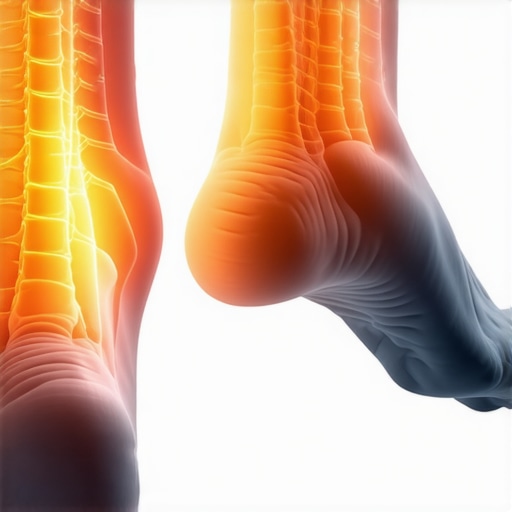
It’s a sophisticated question: is the blockage structural or just a sensory mismatch? Sometimes, the neck feels stuck because the foundation—the pelvis and feet—is failing to provide a level base. This is known as ‘regional interdependence.’ A 2017 study in the Journal of Orthopaedic & Sports Physical Therapy emphasized that treating the thoracic spine and even the hips can significantly alleviate neck pain. If you don’t address the hidden link between your ankles and lower back health, your neck will always be the ‘canary in the coal mine,’ screaming because the rest of the kinetic chain is silent. Even in the gym, something as simple as using the deadlift cue that stops your lower back from rounding can indirectly save your neck by forcing your mid-back to take the load. We have to move past the ‘no pain, no gain’ mentality because the truth about no pain no gain in sports rehab is that it often leads to chronic compensation patterns that take years to undo. True recovery is about precision, not force.
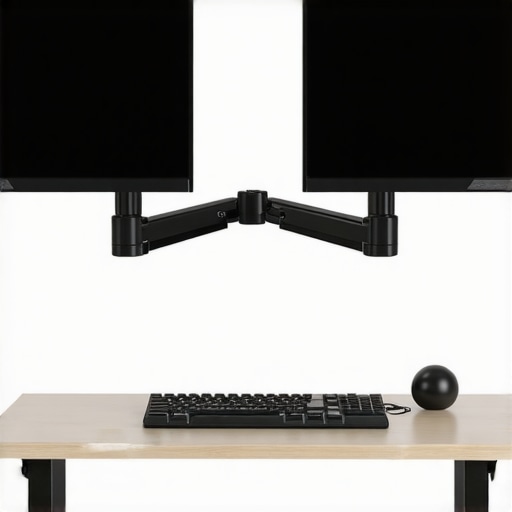
Keeping your spine working isn’t just about what you do when you’re hurting; it’s about the systems you build to prevent the rust from settling in. For me, that meant moving beyond the foam roller. I personally swear by a dual-monitor setup with independent gas-spring arms. Why? Because most ‘ergonomic’ stands don’t account for the fact that your dominant eye might be slightly different, forcing a micro-rotation in your neck all day. By using how to adjust your monitor to stop mid-back burning, I’ve eliminated that slow-burn fatigue that used to peak by 3 PM.
The Gear That Actually Makes a Difference
Beyond the desk, I use a simple lacrosse ball for ‘active release’ on my own. It’s more targeted than a foam roller. As Dr. Stuart McGill, a world-renowned expert in spine biomechanics, often emphasizes in his ‘Spine Hygiene’ protocols, we must spare the back from unnecessary cycles of flexion. This means using your hips to move, not your spine. I’ve found that strategic chiropractic solutions for long-term back health are less about the ‘pop’ and more about maintaining the neurological window that allows me to move correctly. If you’re struggling with the same, you need to look at how to set up a home office in a small space without ruining your back.
How do I maintain my progress without living at the clinic?
Maintenance is about consistency over intensity. I schedule a ‘tune-up’ adjustment once a month, even if I feel great. This is because enhancing athletic performance with targeted chiropractic care works best when you are proactive. It’s like getting an oil change for your car; you don’t wait for the engine to seize. I also keep a close eye on why your shoes are wearing out unevenly and what it means for your hips, because your foundation dictates your neck’s fate. Looking ahead, I suspect we’ll see a massive shift toward wearable biofeedback sensors that vibrate when your cervical spine enters a ‘high-load’ posture—basically a personal trainer for your neck that lives on your collarbone. If you want to stop the cycle today, try this: set a timer for every 45 minutes and perform the 2-minute drill to stop a tension headache in its tracks. It is the single most effective way to reset your nervous system mid-day. Don’t wait for the pain to tell you to move.
We’ve all been there: waking up on Monday with a neck that feels like it’s been fused shut. After years of navigating my own spinal issues and working through professional rehab protocols, I’ve realized that the solutions are often counterintuitive. If you’ve followed along with the first half of this guide, you know that the couch is a secret enemy and your mid-back holds the key to your neck’s freedom.
The Three “Aha!” Moments That Changed My Neck Health Forever
The biggest shift in my recovery happened when I stopped treating my neck as an isolated unit. First, I realized that my neck was often the victim, not the criminal; it was screaming because my upper back was a motionless brick. Second, I finally understood that essential tips for managing back pain through healthy lifestyle choices, like micro-breaks and hydration, aren’t just “nice to have”—they are non-negotiable for nerve health. Third, I accepted that while I could manage symptoms at home, the role of chiropractic care in effective sports injury recovery applies just as much to the “industrial athlete” sitting at a desk as it does to a sprinter. Precision matters more than force, and a professional correction beats self-cracking every single time.
My Go-To Tools for Staying Mobile and Pain-Free
I don’t believe in cluttering your home with gadgets, but a few specific items have saved my sanity. I use a firm lacrosse ball daily for targeted release between my shoulder blades to keep my thoracic spine from locking up. I also made the switch to a dual-monitor setup with gas-spring arms, which allowed me to find unlocking back pain relief expert chiropractic adjustments that work for my specific eye level. Most importantly, I’ve committed to strategic chiropractic solutions for long-term back health as a proactive measure. I no longer wait for a flare-up to seek help; I maintain the motion I’ve worked so hard to regain. It’s about building a system that makes health the default setting, rather than a constant uphill battle.
#IMAGE_PLACEHOLDER_E#
You Don’t Have to Settle for a Stiff Spine
If you take one thing away from this, let it be that your body has an incredible capacity to heal if you stop fighting against its natural mechanics. You don’t have to accept that “Monday Morning Rust” as part of your identity. By implementing small resets throughout the day and utilizing discover how chiropractic adjustments can alleviate chronic back pain, you can break the cycle of stiffness and start your week with energy instead of an ice pack. Your spine is the foundation of your movement—treat it with the respect it deserves, and it will carry you through the toughest work weeks with ease. Have you noticed that your neck pain is worse after a weekend on the couch, or does it flare up most during the work week? Let me know in the comments below.