
I still remember the Tuesday morning I almost called a cab just to get three blocks back to my house. I was only ten minutes into what was supposed to be a breezy three-mile jog, but my calves felt like they had been replaced by 50-pound bags of wet concrete. It wasn’t just tiredness; it was a heavy, suffocating weight that made every stride feel like I was wading through waist-deep molasses. I felt broken, frustrated, and honestly, a little embarrassed. If you have ever felt that leaden sensation in your quads before you have even broken a sweat, I want you to know you aren’t just ‘out of shape’—there is usually a mechanical or neurological reason your body is putting on the brakes. Today, we are going to dive into why this happens and how we can get that spring back in your step.
The Morning My Legs Just Refused to Cooperate
For years, I made the classic mistake of thinking the solution was more stretching. I assumed my legs were heavy because my muscles were ‘short.’ I spent twenty minutes every morning doing static holds, but why your morning stretches might be making your back more sensitive is something I wish I had known back then. I was actually irritating my nerves, making that heavy feeling even worse. The ‘lead leg’ phenomenon is often less about the muscles in your legs and more about how your brain and spine are communicating with them. If your alignment is off, your body goes into a protective mode, effectively ‘governing’ your power output to prevent an injury it thinks is coming.
Is this actually just a lack of cardio?
It is the biggest doubt every runner has: maybe I’m just not fit enough. But if you can usually handle a workout and suddenly find yourself dragging, it is rarely a cardio issue. According to the American Council on Exercise, persistent heavy-leg sensations are frequently tied to ‘overtraining syndrome’ or poor biomechanics rather than a sudden drop in aerobic capacity. Have you ever experienced that sudden, inexplicable heaviness halfway through a run that you know you should be able to crush?
Your Lower Back Might Be Pulling the Strings
One thing I learned the hard way is that why your running form is destroying your lower back is often the secret culprit behind leg fatigue. When your lumbar spine is compressed or misaligned, it can pinch the very nerves that tell your legs to move. This creates a ‘muted’ signal, making your limbs feel heavy and unresponsive. Instead of just hammering out more miles, I started focusing on the best way to warm up for a morning run, which involves waking up the nervous system rather than just pulling on cold tendons. I also realized that how chiropractic care can shorten your injury recovery time was the missing piece to keeping my pelvis level and my stride light. If you are constantly fighting against your own body, no amount of ‘gutting it out’ will fix the underlying structural drag. In the next section, we’ll look at the specific steps to lighten the load.
Stop Letting Your Brain Put the Brakes on Your Quads
Imagine your nervous system is like the electrical wiring in a high-performance sports car. If the battery is sending a weak or interrupted signal to the engine, it doesn’t matter how high-octane your fuel is; the car is going to sputter and drag. This is exactly what happens when your lumbar spine or pelvis is misaligned. Your brain detects even a microscopic potential threat to your spinal cord and intentionally ‘mutes’ the power output to your large muscle groups. It is a protective mechanism called neural inhibition, designed to stop you from moving too fast and causing permanent damage. To bypass this, we have to clear the line of communication. By focusing on enhancing athletic performance with targeted chiropractic care, you are essentially cleaning the corrosion off those battery terminals. When the vertebrae are stacked correctly, the signal from your motor cortex to your quadriceps travels at lightning speed, removing that ‘heavy leg’ sensation almost instantly.
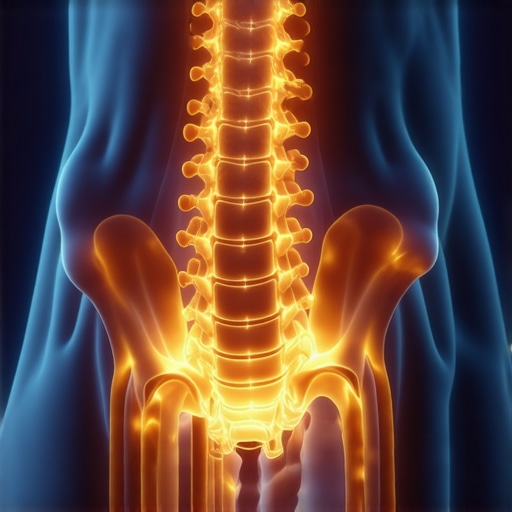
Why a Wonky Pelvis Drains Your Gas Tank
I remember a specific morning before a local trail race where I felt like I was running through waist-deep wet cement. I had spent nearly four hours the night before hunched over my laptop, and my pelvis had shifted into a slight anterior tilt, which effectively ‘turned off’ my gluteal muscles. This small structural change meant my hip flexors and quads had to do double the work to maintain my pace. Every stride was a fight against gravity. When I finally realized what was happening, I pulled over and used the simple move to reset your hips after a long drive, and the result was immediate. It was like someone had finally cut the invisible bungee cord that was pulling me backward toward the starting line. If you feel a hitch in your giddy-up or a weird tightness that won’t go away, stop ignoring the click in your hip during leg raises, because that clicking sound is often your body’s alarm system screaming that your biomechanics are out of sync.
The 3-Minute Routine to Reboot Your Legs
Instead of pulling on your hamstrings like they are pieces of old, frayed rope, you need to wake up the proprioceptors in your joints. Static stretching can actually decrease muscle power in the short term, which is the last thing you want when your legs already feel like lead. I switched my morning routine to focus on nerve flossing and pelvic leveling exercises. This shift is a critical component of how to boost your sports rehab journey with proven chiropractic strategies. By integrating movements that challenge your balance and wake up your core, you force your brain to acknowledge exactly where your limbs are in space. We know how spinal alignment affects your balance and stability, so starting your run with a ‘quiet’ and aligned spine is the fastest way to ensure your legs feel light and responsive.
Clear the Path for Fluid Movement
Often, the heaviness isn’t metabolic fatigue; it is caused by ‘neural tension,’ where the nerves are literally being snagged or tugged on as you move. Think of it like a brake cable on a bicycle that is just a fraction too short; every time you try to accelerate, the brake pads rub against the rim. The science behind chiropractic adjustments for back pain relief shows that by creating space in the spinal joints and reducing disc pressure, we release that mechanical tension on the nerves. I once worked with a runner who was convinced he had chronic fatigue syndrome because his legs felt so heavy; after one targeted adjustment to his lower back, he felt ten pounds lighter on his next run because his nervous system finally had the room to breathe and function without interference.
Let’s dig deeper. Most people assume that if their legs feel heavy, they need to attack them with a foam roller or a massage gun. But here is the contrarian truth: you cannot massage away a neurological inhibition. If your lead-leg feeling is coming from neural tension—where the nerve is literally snagged in the lumbar tunnel—excessive foam rolling can actually act like a cheese grater on an already inflamed nerve. I have seen so many runners make their symptoms worse because they didn’t know how to relieve IT band pain without using a foam roller. When you compress a nerve that is already crying for space, your brain’s response is to lock the muscles down even tighter to protect it. It is a vicious cycle of ‘stretching’ a fire that needs to be extinguished, not fanned.
Why does your MRI look perfect when your performance feels like a disaster?
This is the most common frustration for high-level athletes. You get an image taken, the radiologist says everything is ‘age-appropriate,’ yet you still feel like you’re running through mud. It is vital to learn how to read your MRI report without panicking, because structure does not always equal function. A study published in the Journal of Orthopaedic & Sports Physical Therapy (JOSPT) found that a significant percentage of pain-free athletes have disc bulges, while many in agony have pristine-looking spines. The ‘heaviness’ is often a functional breakdown—the way your segments move together—rather than a structural tear. This is why revolutionize your rehab chiropractic techniques for faster recovery focus on motion and joint play rather than just looking at a static picture.
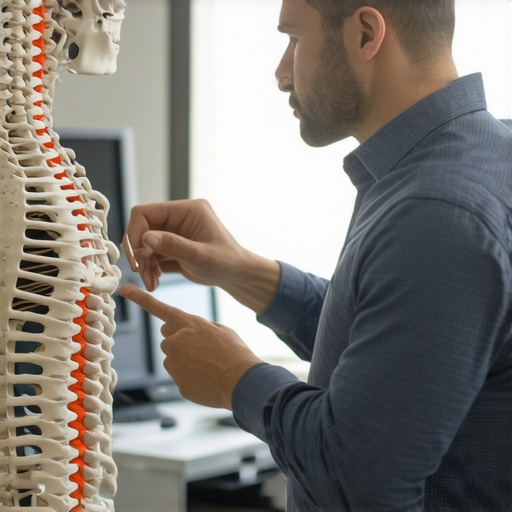
Have you ever fallen into this trap of treating the symptom instead of the system? Let me know in the comments. The ‘oops’ factor usually kicks in when we ignore the kinetic chain. For instance, you might think your quads are the problem, but why your glutes aren’t firing during your workouts is often the real reason your legs feel like anchors; your body is compensating for a ‘sleepy’ posterior chain by overworking the front. When we apply the role of chiropractic care in effective sports injury recovery, we aren’t just ‘cracking’ backs; we are resetting the timing of these muscle contractions.
Ditch the ‘no pain no gain’ mantra for faster results
We’ve been conditioned to believe that if a rehab exercise doesn’t hurt, it isn’t working. In the world of neurological recovery, that’s a dangerous lie. Pushing through sharp pain during a nerve glide or an adjustment actually reinforces the brain’s ‘danger’ signal, keeping your legs in that heavy, protected state. Understanding the truth about no pain no gain in sports rehab is the difference between a three-week recovery and a three-month plateau. If you are ready to stop guessing and start moving with precision, contact us to get a functional assessment that looks past the surface-level tightness.
Once you’ve cleared that initial neurological hurdle and your legs finally feel like they belong to you again, the real challenge begins: keeping them that way. I used to think that a single adjustment was a ‘fix’ that would last forever, but I quickly learned that my daily habits were constantly trying to undo the progress I’d made. If you spend eight hours a day in a chair, you are essentially training your body to be stiff. To combat this, I’ve adopted what I call ‘Spinal Hygiene.’ It’s the same way you brush your teeth to prevent cavities; you need to move your joints to prevent that leaden sensation from creeping back in. Integrating essential tips for managing back pain through healthy lifestyle choices is the foundation of staying light on your feet. It’s not about doing more work; it’s about doing the right work consistently.
How do I maintain these results over time?
The secret is in the ‘1% Rule’—small, daily resets that prevent tension from accumulating. For me, this involves a specific tool I never travel without: a standard lacrosse ball. While most people use it to smash their sore muscles, I use it for something far more effective. I use it to target my thoracic spine to ensure my mid-back stays mobile, which prevents my lower back from overcompensating. Learning how to use a lacrosse ball for better thoracic mobility was a game-changer for my running form. When my mid-back moves, my pelvis stays neutral, and my legs don’t have to fight against my own skeleton. This is a core part of strategic chiropractic solutions for long-term back health. If you aren’t managing your mechanical ‘leaks’ daily, you are just waiting for the next flare-up.

As we look toward the future of sports performance, I predict we will see a massive shift toward real-time biomechanical feedback. We are already seeing wearable sensors that track ‘ground contact time’ and ‘pelvic tilt’ during a run. In five years, your watch will likely tell you when your nervous system is beginning to ‘inhibit’ your quads before you even feel the heaviness. This aligns with the principles of Dr. Stuart McGill, a leading expert in spine biomechanics, who emphasizes ‘proximal stiffness for distal mobility.’ By keeping your core and spine stable through expert chiropractic adjustments that work, you allow your limbs to move with maximum efficiency and zero drag. This is how you scale your performance without breaking your body. If you want to stop the cycle of ‘two steps forward, one step back,’ you need to contact us for a plan that prioritizes your long-term structural integrity. Try this today: the next time you feel that heaviness starting, instead of stretching your quads, try a 30-second plank to ‘stiffen’ your core and see if your legs immediately feel lighter.
The Hardest Lesson I Learned About Chronic Leg Heaviness
Looking back at my own journey with athletic performance, the most humbling realization was that rest is not a cure-all. I used to think if my legs felt heavy, I just needed a week off. But when I returned, that bags-of-cement feeling was waiting for me at the three-mile mark. I finally understood that you cannot out-rest a mechanical misalignment. If your pelvis is rotated, your nervous system will keep the ’emergency brake’ on regardless of how many naps you take. Another ‘lightbulb moment’ was realizing that why your morning stretches might be making your back more sensitive was actually the reason my legs felt even heavier after a yoga session. I was tensioning my nerves instead of releasing my muscles. The biggest shift occurred when I stopped treating my quads and started boosting my sports rehab journey with proven chiropractic strategies. Once the communication between my spine and my legs was clear, the ‘weight’ simply vanished. Moving with a clear neurological path feels like running with a tailwind every single day.
Tools That Keep Me Moving Without the Drag
I am often asked what I keep in my gym bag to ensure my legs stay responsive and light. My first essential is a simple lacrosse ball. While most people use it to smash their glutes, I focus on the mid-back to ensure my spine doesn’t lock up and put pressure on my lower lumbar nerves. Learning how to use a lacrosse ball for better thoracic mobility has been a literal lifesaver for my running gait. Secondly, I highly recommend the book ‘Back Mechanic’ by Dr. Stuart McGill; it changed how I view core stability and its impact on leg power. Finally, I never skip my monthly maintenance alignment. It is the most effective way of strategic chiropractic solutions for long-term back health. These tools aren’t just about recovery; they are about maintaining a body that is ready to perform at a moment’s notice.
Your Path to Effortless Strides Starts Now
You don’t have to accept heavy, leaden legs as your new normal. Whether you are a marathoner or someone who just wants to enjoy a walk around the block, your body is designed for fluid, easy movement. By prioritizing your spinal alignment and listening to the subtle signals your nervous system is sending, you can reclaim that spring in your step. Your role of chiropractic care in effective sports injury recovery is the bridge between feeling ‘stuck’ and feeling unstoppable. Don’t wait for a major injury to take your biomechanics seriously. If you are ready to feel light again, contact us today for a full functional assessment. Have you ever felt that strange sensation where one leg feels significantly heavier than the other during a workout? Let me know in the comments below!