
I remember the exact moment my left knee decided to quit. It was mile four of what was supposed to be a breezy morning run. Suddenly, it felt like a hot, serrated blade was sawing into the outside of my joint. I did what every informed runner does: I hobbled home and spent thirty minutes weeping on a foam roller. I thought if I just mashed that stubborn band of tissue hard enough, it would finally let go. I was wrong. In fact, I was making it worse. My mistake was treating the IT band like a tight muscle that needed tenderizing, when in reality, it is a thick, fibrous stabilizer that is usually just reacting to a mess happening somewhere else in the chain. I spent weeks bruised and frustrated, wondering why the standard cure was leaving me more immobile than the injury itself.
The Foam Roller Might Be Your Knees Worst Enemy
We’ve been sold this idea that if something hurts, we should roll it out until we see stars. But here is the thing: your IT band isn’t actually a muscle. It is a thick, stubborn strap of fascia. When you smash it against your femur with a piece of high-density foam, you are often just compressing the highly sensitive bursa and nerves underneath. I learned the hard way that the truth about no pain no gain in sports rehab is that sometimes, you are just creating more inflammation instead of fixing the root cause. If you have been rolling for weeks with no relief, you aren’t alone. Have you felt that sharp, clicking pain every time your foot hits the pavement lately? It is a sign your body is screaming for a different approach. We need to look at the mechanics of the hip and the ankle rather than just the point of pain.
Does non-rolling rehab actually work?
I get the skepticism. We see everyone at the gym gritting their teeth on those blue rollers, so we assume it is the gold standard. But once I stopped the death-rolling and started looking at my kinetic chain, everything changed. I realized that why your foot arch affects your knee alignment during lunges and runs was the missing piece of my puzzle. My collapsing arches were causing my knee to dive inward, which put the IT band under constant, agonizing tension. By using proven chiropractic strategies to realign my hips and ankles, I finally gave my IT band the slack it was begging for. A study published in the Journal of Orthopaedic & Sports Physical Therapy highlights that strengthening the hip stabilizers is significantly more effective for ITBS than traditional stretching or rolling. This realization is a huge part of the role of chiropractic care in effective sports injury recovery. It is about finding the why behind the ouch rather than just masking the symptoms with a painful massage tool. Today, we are going to look at the specific moves that actually create space and stability in your leg without the need for a single piece of foam.
Focus on These Three Fixes Instead of the Roller
Think of your IT band as a tension cable on a suspension bridge. If the bridge towers (your hip and ankle) start leaning, the cable gets tight. Screaming at the cable won’t fix the towers. We need to reset the structural integrity of your leg from the ground up by addressing the stabilizers rather than the point of pain.
Get Your Glutes Working Like Guy-Wires
Most of us have ‘sleepy’ glutes from sitting all day. When your glute medius—the muscle on the side of your hip—fails to fire, your knee caves inward. This movement pulls the IT band taut across the bone. I remember trying to power through a hill workout and feeling that familiar snap-pop on the side of my knee. I stopped, did ten slow, controlled side-lying leg raises, and the pain dimmed significantly. It was a wake-up call that muscle activation, not passive stretching, was the key. Using targeted chiropractic care can help wake up those neural pathways that have gone dormant. If you want to dive deeper into why specific muscles fail, you might see how a weak core actually causes chronic neck tension; the principle of distal compensation is exactly the same for your knee.
Your Feet are the Foundation for Your Knee
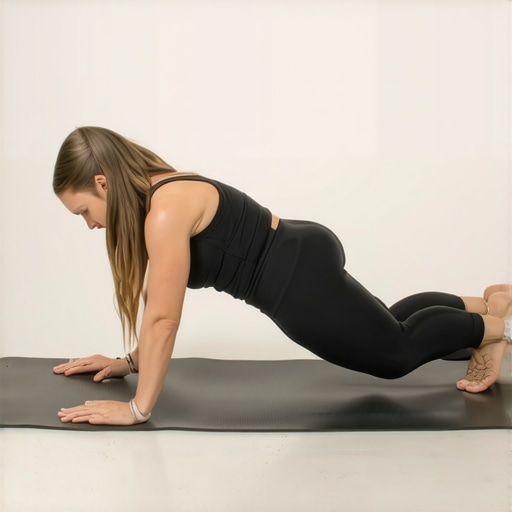
If your arches collapse every time you take a step, your shin bone (tibia) rotates inward. This creates a twisting force that the IT band tries to resist. It’s a losing battle. I’ve seen runners spend hundreds on shoes only to find that why your running shoes are causing your shin splints is often tied back to this same lack of arch support. You need to practice ‘short foot’ exercises—scrunching your toes to lift the arch—while performing lunges. This stabilizes the knee from below, taking the pressure off that lateral strap of tissue. If you find your shoes are wearing out on one side, it’s a huge red flag. Understanding why your shoes are wearing out unevenly can reveal exactly how your gait is sabotaging your IT band health.
The Pelvic Tilt That Ruins Your Alignment
If one side of your pelvis is hiked higher than the other, your IT band is effectively being stretched like a rubber band on one side and compressed on the other. This often happens because of a functional leg length discrepancy. It’s why why your chiropractor checks your leg length every visit is so critical for runners. During one of my worst flare-ups, I realized I was always carrying my heavy camera bag on one shoulder, which hiked my right hip. That small, daily habit was the ‘silent killer’ for my left knee. By utilizing strategic chiropractic solutions, we can level the pelvis, which instantly changes the tension profile of the IT band. You can also experiment with the secret to pain-free squats for people with long femurs to ensure your mechanics aren’t working against your anatomy. Stop fighting the symptoms and start balancing the bowl of your pelvis.
Stop Waiting for the Pain to Vanish
Most people assume that when an injury flares up, the best course of action is to lie on the couch and wait. In reality, static rest is often the ‘silent killer’ of a fast recovery. While you’re waiting for the pain to go away, your muscles are beginning to atrophy and your nervous system is becoming more sensitive to threat. This is why why bed rest is the worst thing for acute back spasms and many other sports injuries. A study published in the British Journal of Sports Medicine introduced the ‘PEACE & LOVE’ protocol, which emphasizes that ‘Loading’ (the L in LOVE) is crucial for tissue repair. You don’t need total silence; you need controlled, strategic movement to tell your body that it is safe to heal. Have you ever fallen into this trap of thinking rest was the only way out? Let me know in the comments.
The Tightness Trap Most Athletes Fall Into
We’ve all been there: your hamstrings or IT band feel like steel cables, so you spend 20 minutes a day trying to touch your toes or rolling out. But here is the nuance: if those tissues are tight because your pelvis is out of alignment, stretching them is like pulling on both ends of a rope that’s already taut. You aren’t releasing tension; you’re just irritating the nerve. This is a classic example of why your morning stretches might be making your back more sensitive. You have to address the pelvic alignment first through the science behind chiropractic adjustments for back pain relief before that ‘tightness’ will ever truly let go. If you keep stretching without addressing the structural cause, you’re just spinning your wheels.
How do I know if my joint cavitation is actually effective?
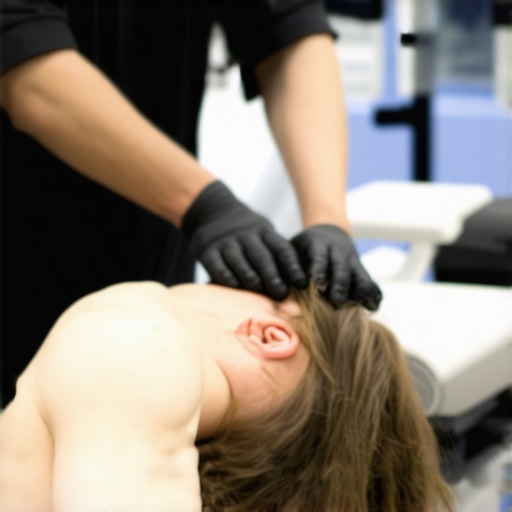
Many patients get fixated on the ‘pop’ during a treatment session, thinking that the louder the sound, the better the fix. This is a common misconception in sports rehab circles. The sound—medically known as cavitation—is just the release of gas bubbles from the joint fluid. While it feels great, the real magic is the neurological reset that happens immediately after. By understanding the science behind that popping sound in your joints, you realize that the goal isn’t just the noise; it’s the improved communication between your brain and your muscles. This is where the real difference between a chiropractor and a PT often lies—one focuses on the joint’s neurological input, while the other focuses on the soft tissue output. For a complete recovery, you often need both. When you stop chasing the ‘pop’ and start chasing improved movement patterns, you’ll find that the truth about no pain no gain in sports rehab is that the most effective adjustments are often the most precise, not necessarily the most forceful.
Maintaining your progress isn’t about doing more rolling; it’s about high-quality feedback loops and building a body that can handle the load. I personally rely on a heavy-duty fabric resistance band, specifically the Slingshot Hip Circle. Unlike those cheap rubber bands that roll up your thighs and snap, this fabric band provides the consistent lateral resistance needed to wake up the glute medius before every run. If you are wondering how to choose the right resistance band, the same logic applies to the lower body: the quality of the tension matters more than the raw resistance. I also use a slant board to address ankle dorsiflexion daily. This is crucial because the hidden link between your ankles and lower back health directly impacts how your knee tracks during a gait cycle. If your ankle is stuck, your knee will find the movement somewhere else, usually by collapsing inward and tugging on that IT band.
How do I maintain my knee health for the long run?
Consistency in maintenance is the only way to avoid a relapse. I’ve found that proven chiropractic strategies aren’t just for when you’re broken; they are for staying mobile. Once a month, I get a check-up to ensure my pelvis hasn’t started that subtle tilt that sets off the chain reaction. According to Dr. Chris Powers of the Movement Performance Institute, hip external rotation strength is the single best predictor of knee stability during high-impact tasks. This means my focus is always on ‘locking’ the hip into the socket before I ever lace up my shoes. I also recommend using a small wedge under your heel during squats if you have limited mobility, as this helps you maintain a vertical spine and prevents the ‘butt wink’ that can strain the lower back. By prioritizing strategic chiropractic solutions and functional strength, you move from a state of ‘fixing’ to a state of ‘performing.’

The future of gait analysis is already here
We are moving away from the era of guessing why things hurt. I predict that within the next five years, real-time gait sensors—like those developed by companies like Stryd—will be standard in every runner’s toolkit. These sensors can alert you to a collapsing arch or a decrease in hip drive before you even feel the first twinge of pain. This kind of proactive data is the future of enhancing athletic performance with targeted chiropractic care. Instead of reacting to an injury, we will be able to revolutionize your rehab by catching the mechanical flaw in the first mile of a run. For now, the best tool you have is your own awareness. I want you to try this: the next time you feel that ‘tightness’ in your leg, spend two minutes on glute bridges with a heavy band before you reach for the roller. Feel the difference in how your knee tracks afterward. It is a game changer for long-term durability. If you’ve been struggling with a persistent click or snap that won’t go away, it might be time to stop the DIY approach and get a professional eyes-on assessment of your mechanics.
Hard Lessons from My Own Recovery Journey
Reflecting on my recovery, I realized that the hardest part wasn’t the exercises—it was unlearning the ‘more is better’ mindset. I used to think if my knee felt tight, I had to stretch it more, but I discovered why your morning stretches might be making your back more sensitive and irritable. Another lightbulb moment was recognizing that a ‘snap’ in the hip isn’t just a sound; it’s a signal. You have to learn how to tell the difference between muscle soreness and a real injury before you decide to push through a workout. Lastly, recovery is never a straight line. Some days you’ll feel 100%, and others the phantom ache returns—that’s when your mechanics matter most.
#IMAGE_PLACEHOLDER_E#
The Tools That Actually Earned a Spot in My Gym Bag
I’ve wasted plenty of money on gimmicks, but a few things have proven their worth for long-term knee health. First, a heavy-duty fabric hip circle is non-negotiable for glute activation; knowing how to choose the right resistance band ensures you get enough tension to actually wake up the muscles. Second, I swear by a dedicated slant board to work on ankle mobility, which takes the torque off the knee joint. Finally, keeping a log of my gait changes has been more helpful than any fancy massage gun. If you are feeling overwhelmed by the technical side of movement, you can always contact us for a personalized assessment.
Reclaim Your Run and Leave the Pain Behind
The journey away from chronic IT band pain isn’t about finding a magic foam roller; it’s about building a body that functions as a single, cohesive unit. When you shift your focus from ‘fixing’ a spot to optimizing your entire kinetic chain, you can revolutionize your rehab and get back to the activities you love without fear. Proper sports rehab is a marathon, not a sprint, but the rewards of a pain-free stride are worth every controlled lunge and hip bridge. Have you ever tried a specific exercise that finally made your knee pain ‘click’ into place? Let me know in the comments!