
I remember staring at a 45-pound barbell during a CrossFit session, feeling like my arms were made of lead and my shoulders were glued shut. Every time I tried to lock out overhead, I would get that sharp, annoying bite in the front of my joint. I spent months doing every lat stretch under the sun, thinking my muscles were just tight. I was wrong. I was actually ignoring the very engine that drives shoulder movement: the shoulder blade. If you have ever felt like your shoulders were physically blocked from going any higher, you are likely missing the same piece of the puzzle I was. Today, we are going to fix that by focusing on a specific scapular drill that transformed my overhead mobility and saved my training.
Stop Stretching Your Lats and Start Moving Your Scapulae
For a long time, I made a massive mistake: I thought scapular stability meant pinning my shoulders back and down at all times. I thought I was protecting my spine, but I was actually killing my range of motion. When you reach up, your shoulder blade needs to rotate upward and glide along your rib cage. If it stays stuck, your arm bone has nowhere to go but straight into the top of your shoulder socket. This is often why your shoulder pinches during lateral raises or overhead presses. It is not always a lack of flexibility; it is a lack of coordination. Research published in the Journal of Athletic Training notes that roughly one-third of the total shoulder elevation comes from the movement of the scapula on the rib cage, not the arm bone itself. This “scapulohumeral rhythm” is the secret sauce for anyone trying to pass the overhead mobility test every CrossFit athlete should pass. I had to learn the hard way that you cannot just stretch your way out of a movement problem. [IMAGE_PLACEHOLDER]
Does This Simple Drill Actually Work?
I know what you are thinking. You have probably tried a dozen different warm-ups and still feel like you are hitting a brick wall. You might be skeptical that a simple scapular drill can succeed where a heavy lat stretch that stops your shoulder from clicking failed. But here is the truth: mobility is as much about your brain’s control over your muscles as it is about the length of the tissues themselves. By teaching your scapula how to rotate upward properly, you create space in the joint. It is like opening a door fully instead of trying to squeeze through a crack. Once I started incorporating this drill, the “pinching” sensation vanished. I stopped fighting my own anatomy. Before you grab another lacrosse ball for better thoracic mobility, let us look at the mechanics of why your rib cage and shoulder blades must work together to get your arms over your head without pain.
Master the Scapular Wall Slide for Pain-Free Pressing
To fix your overhead mechanics, you have to stop thinking of your arm and shoulder as separate units. Think of your shoulder blade like a trailer on a semi-truck; if the trailer doesn’t pivot and follow the truck during a turn, the whole rig jackknifes. That ‘jackknife’ is the pinching sensation you feel. To perform the scapular wall slide, stand facing a wall with your feet about six inches from the baseboard. Place your forearms against the wall in a ‘V’ shape, with your elbows slightly narrower than your wrists. As you slide your arms up, do not just reach with your hands. Instead, focus on the bottom tip of your shoulder blade swinging out toward your armpit. This is the upward rotation I mentioned earlier. If you find your shoulders shrugging toward your ears, stop. You are likely compensating with your upper traps because your serratus anterior—the muscle responsible for pinning the blade to your ribs—isn’t doing its job. This is the same scapular stability move every baseball player needs to maintain a healthy arm throughout a long season. 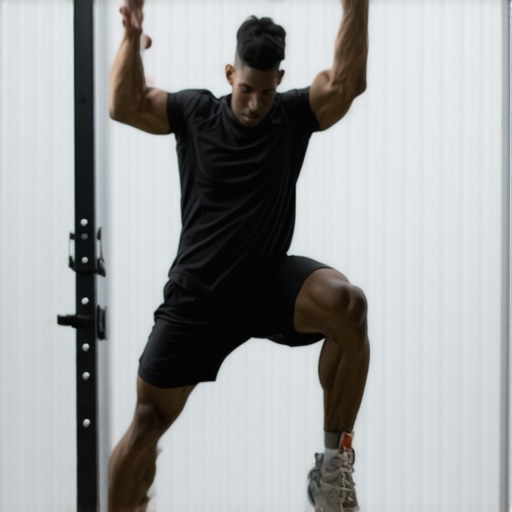
Keep Your Ribs Down to Unlock More Range
One of the most common mistakes I see, and one I made for years, is ‘cheating’ the movement by arching the lower back. When your shoulder reaches its physical limit, your brain will try to find extra range of motion by tilting your entire rib cage upward. This creates a false sense of mobility but actually puts your shoulder in a compromised position. This is why you must perform the simple test for rib flare and why it matters for your core before you go heavy on the platform. I remember a specific Tuesday morning training session where I was struggling with 135-pound overhead presses. Every rep felt like a knife was poking my front delt. I stepped back, leaned against the wall, and focused on exhaling deeply to ‘knit’ my ribs down while performing five slow wall slides. When I returned to the bar, the ‘blockage’ was gone. By keeping the ribs down, I forced the movement to happen at the shoulder blade, which cleared the path for the arm bone to move freely.
The Pinky Trick for Better Serratus Activation
If you are struggling to feel your shoulder blades moving, try the ‘pinky drive.’ As you slide your arms up the wall, apply pressure into the wall specifically through the pinky side of your hands and forearms. This small tweak creates a chain reaction that engages the serratus anterior and helps pull the scapula into upward rotation. This mechanical adjustment is often what we look for when discussing the role of chiropractic care in effective sports injury recovery, as it addresses the underlying movement dysfunction rather than just the symptom of pain. If your shoulder pinches during lateral raises, this drill serves as a perfect primer to reset the joint before you start your accessories. It is not about how high you can get your hands, but how well you can control the rhythm of the bone beneath the skin. When the rhythm is off, the joint grinds; when the rhythm is right, the weight feels light.While drills like the wall slide are game-changers, there is a deeper level of nuance that most people—even seasoned lifters—completely miss. I often see patients who spend thirty minutes every morning on a foam roller, yet their stiffness never actually leaves. This brings us to a major contrarian truth: your muscles probably are not short; they are just protective. We have been conditioned to think that if a muscle feels stiff, we should pull on it until it gives up. But in many cases, especially with the lower back and hips, that stiffness is a parking brake applied by your nervous system because it does not trust your stability. If you keep pulling on a muscle that is trying to protect a vulnerable joint, you are just making the problem worse. This is exactly why your morning stretches might be making your back more sensitive rather than fixing the root cause. One of the biggest oops factors I see in the clinic is the habit of self-manipulation. You know the person—the one who twists their torso or jerks their neck until it cracks five times a day. Here is the trap: you are usually cracking the segments that are already moving too much. In the world of sports rehab, we call this hypermobility compensation. The joint that is actually stuck (the hypomobile one) stays stuck, while the joints above and below it get looser and looser. It feels good for about ten minutes because of a temporary endorphin rush, but you are actually destabilizing your spine over time. That is why you should stop cracking your own neck for relief and instead focus on targeted adjustments that hit the specific segment that is not pulling its weight. 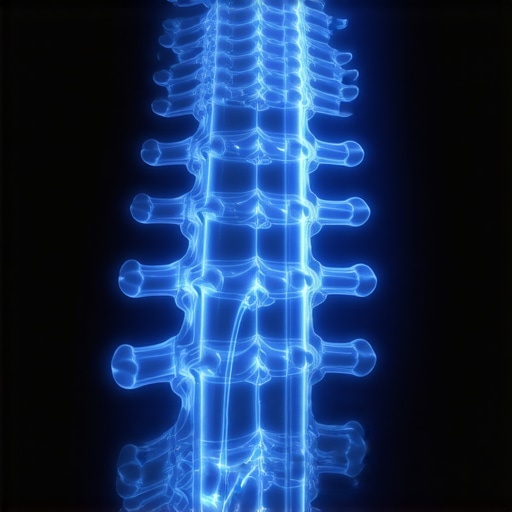
Why does your adjustment feel like it wears off by Tuesday?
This is the million-dollar question for athletes looking to revolutionize your rehab. If you get adjusted on Monday and feel out by Tuesday, it is rarely because the bone slipped. It is because the neurological software has not caught up to the hardware change. A study published in the Journal of Electromyography and Kinesiology by Dr. Joel Pickar highlights that spinal manipulation does not just move bone; it changes the input to the nervous system by stimulating mechanoreceptors. If you do not follow up that adjustment with the right stability work, your brain will revert to its old, painful patterns. You have to understand the science behind chiropractic adjustments for back pain relief to realize it is a reset button, not a permanent fix. We have to move past the fix me mentality. High-level performance requires you to stop believing the truth about no pain no gain in sports rehab and start listening to the subtle signals of movement dysfunction. Have you ever fallen into this trap of stretching a tight muscle only for it to feel worse an hour later? Let me know in the comments.Once you clear that initial hurdle of pain, the real work starts. I used to think I was done once I hit a personal record without a shoulder pinch, but the reality is that physical progress is a lease you have to pay every day. To keep my spine and shoulders in check, I rely on a few non-negotiable tools and habits. First is the lacrosse ball, but not for mindless rolling while I scroll on my phone. I use it for active release on my pec minor to prevent my scapula from being pulled into a forward tilt. This is a foundational part of the strategic chiropractic solutions for long-term back health that I have integrated into my pre-workout routine. If I skip this, I can feel those rounded shoulders creeping back within forty-eight hours. I also swear by heavy resistance bands for face pulls with a specific emphasis on external rotation. This isn’t just about building muscle; it is about reinforcing the role of chiropractic care in effective sports injury recovery by stabilizing the small muscles that hold the joint together. A study published in Clinical Biomechanics suggests that isometric loading at end-range positions significantly increases tendon stiffness and joint stability. This is why I hold the peak contraction of my pull-aparts for a full five seconds to rewire how my brain perceives that overhead position.
How do I maintain my shoulder and spine health over time?
Maintenance is not about doing a full hour of mobility work every morning; it is about micro-dosing. I take five minutes before every session to perform my big three: the wall slides we discussed, a quick set with a lacrosse ball for better thoracic mobility, and a breath-work reset to ensure I am not cheating with a rib flare. This consistency is what separates the people who stay healthy from the people who are constantly cycling in and out of the clinic. Integrating essential tips for managing back pain through healthy lifestyle choices—like adjusting your monitor height or how you carry a heavy gear bag—ensures that the work you do in the gym actually sticks. 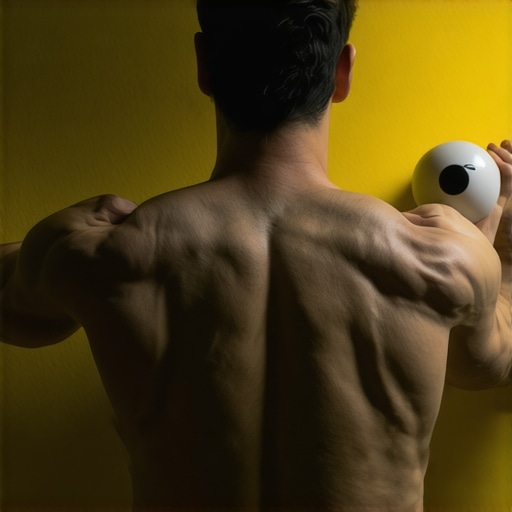
Why Your Next Rehab Tool Might Be a Biofeedback Sensor
Looking ahead, the trend in sports recovery is moving away from passive tools like foam rollers and toward wearable biofeedback. We are entering an era where sensors can vibrate the moment your scapula stops rotating during a press or when your lower back starts to round during a deadlift. We are going to stop guessing and start measuring the quality of movement in real-time. This shift will eventually revolutionize your rehab by providing the same immediate feedback you get from a coach, but for every single repetition you perform in your garage gym. Until that tech is standard, the best biofeedback you have is your own awareness of joint ‘space.’ If you feel that familiar pinch, do not push through it. Stop, reset your ribs, and find that upward rotation again. My challenge for you this week is to commit to the ‘Pinky Drive’ tweak on your wall slides for just two minutes before every workout. Do not wait for the pain to return to start your maintenance.
The Most Expensive Mistakes I Made Before My Shoulders Finally Clicked
Looking back at years of training, I realized that stiffness is often a protective signal rather than a mechanical shortage of muscle length. When my shoulders felt tight, I would yank on them with aggressive stretches, but I was actually ignoring the fact that my brain was ‘braking’ the movement because I lacked stability in the surrounding joints. This is a common hurdle many face when trying to unlock back pain relief with expert chiropractic adjustments. Another lightbulb moment was realizing that ‘feeling a stretch’ isn’t the same as making progress. True progress is when the movement feels effortless, not when you have just tolerated more pain. Finally, I learned that local pain in the shoulder is frequently a global issue involving the rib cage and core mechanics. Once I addressed the foundational stability, my overhead range returned almost instantly. [IMAGE_PLACEHOLDER]
The Gear and Guides That Keep My Joints Supple
I do not believe in having a gym’s worth of gadgets, but there are three things I never travel without to maintain my progress. First, a high-density lacrosse ball—but I use it for precision trigger point work on the pec minor, not just mindless rolling. It is an essential tool to use a lacrosse ball for better thoracic mobility and scapular freedom. Second, I recommend the Supple Leopard by Dr. Kelly Starrett; it completely shifted how I view joint centration. Third, I rely on heavy-duty resistance bands for daily face-pulls to reinforce targeted chiropractic care for athletic performance. These tools do not just ‘fix’ the problem temporarily; they provide the consistent neurological input my nervous system needs to stay out of a protective state.
Reclaiming the Freedom to Move Without Hesitation
The journey from a pinched shoulder to a pain-free overhead press is not just about a single drill; it is about a fundamental shift in how you respect your body’s mechanics. When you stop fighting your anatomy and start working with it, the weights move faster and the recovery feels easier. Do not wait until you are sidelined by an injury to start paying attention to your scapular rhythm. Whether you are lifting in your garage or competing on a platform, your long-term health depends on your willingness to master these subtle movements. By understanding the science behind chiropractic adjustments for back pain relief and pairing it with consistent mobility work, you can stay in the game for decades to come. Have you ever found that your shoulder pain disappears once you fix your rib flare? Let me know below.