
I remember the morning clearly. I rolled out of bed, ready to start my day, and the second my left heel touched the hardwood, I let out a yelp that probably woke the neighbors. It felt like I’d stepped directly onto a jagged shard of glass. I hobbled to the bathroom, wondering if I’d somehow managed to break my foot in my sleep. Spoiler alert: I hadn’t. But that was the beginning of a three-month saga of morning limping and frustration that I wouldn’t wish on my worst enemy. If you’re here, you’ve probably felt that same lightning bolt of pain. We’re going to get to the bottom of why your body is screaming at you and how we can actually quiet it down for good. [image_placeholder]
Stop Blaming Your Calf Muscles for Everything
When I first dealt with this, I fell into the classic trap of thinking my calves were just too tight. I spent twenty minutes every single day leaning against walls, stretching until I was red in the face. It didn’t help. In fact, it made things worse. I eventually realized that the pain wasn’t just a local issue in my heel; it was a loud, angry symptom of how I was moving as a whole. Sometimes the real reason your first few steps out of bed hurt is less about a single tight muscle and more about a tissue that has been overtaxed by poor mechanics elsewhere. According to the American Academy of Orthopaedic Surgeons, about two million patients are treated for this condition every year, and yet so many of us get the initial fix completely wrong by ignoring the kinetic chain. I spent far too long focusing on the spot that hurt rather than the reason it started hurting in the first place. This mistake cost me months of running and hiking, but it taught me that your body is a connected system, not a collection of isolated parts.
Is an expensive pair of shoes really the answer?
You might be skeptical that anything short of surgery or a $300 pair of sneakers will provide relief. I certainly was. I even went through a phase where I thought wearing flip flops all summer was fine because my feet felt free, but I was actually wrecking my natural gait. If you look closely at your favorite pair of sneakers, you might notice your shoes are wearing out unevenly, which is a massive red flag. This isn’t just about the heel; it’s about how your foot arch affects your knee alignment and even your hips. Today, I’m going to show you why looking at the big picture through chiropractic care can shorten your injury recovery time by realigning the way you move. Have you ever found yourself dreading that first step out of bed, or do you find the pain only kicks in after you’ve been sitting at your desk for an hour?
Look Up the Chain to Find the Real Culprit
To fix the foot, you have to stop looking at the foot. Think of your body like a suspension bridge. If one of the main cables in the tower—your hips—is loose, the road deck—your heel—starts to sag and crack. You can patch the cracks all day with cushions or ice, but until you tighten that cable, the problem remains. This is why the role of chiropractic care in effective sports injury recovery is so vital; it addresses the structural shifts that force your feet to work overtime. When your joints are out of alignment, your soft tissue has to act as a secondary stabilizer, a job it was never designed to do.
Waking Up Your Glutes to Save Your Arches
Most of us spend our days sitting, which leads to what some call glute amnesia. When your butt muscles aren’t doing their job to stabilize your leg, your foot often collapses inward to find a false sense of stability. This constant collapsing overstretches the plantar fascia on every single step. I spent months doing calf raises, but the pain didn’t budge until I figured out why your glutes aren’t firing during your workouts and re-engaged them. Once my hips started supporting my weight, my feet finally got the break they deserved. 
Precision Pressure Beats Mindless Rolling
We’ve all seen people mindlessly rolling their foot over a frozen water bottle or a golf ball. While it provides temporary relief, it is the rehab equivalent of a cold compress on a broken arm—it feels nice, but it’s not fixing the underlying tension. You need to target the trigger points in the calf and the lower leg that are actually pulling the ‘lever’ of your heel. Learning the correct way to use a tennis ball for muscle knots can release the tension in your posterior chain without further irritating the already inflamed tissue in your heel. Focus on the ‘meaty’ part of the calf rather than the bone of the heel itself.
Balance the Pelvis to Level the Load
If your pelvis is tilted or rotated, one leg effectively becomes ‘longer’ than the other. This forces one foot to strike the ground with significantly more force on every single step. I remember a specific Tuesday afternoon where my chiropractor adjusted my sacroiliac joint. That night was the first time I didn’t hobble across my kitchen floor. It was proof that how spinal alignment affects your balance and stability is directly tied to the pressure on your heels. You might think why your hip flexors are still tight after a year of stretching is just a flexibility issue, but it’s often a sign that your skeleton is out of whack, forcing those muscles to stay locked in a protective state.
I see it all the time: a patient walks in after ‘stretching out’ their back for forty minutes, only to find the pain is sharper than when they started. We’ve been conditioned to believe that if something feels tight, we must pull on it until it gives up. But here is the nuance most people miss: tightness is often a neurological defense mechanism, not a physical shortening of the tissue. If your brain thinks your spine is unstable, it will lock down your hamstrings to act as ‘rearguard’ support. When you stretch those hamstrings, you aren’t releasing a muscle; you’re actually stripping away your body’s last line of defense. This is why why your hamstrings always feel tight even though you stretch them—they are working overtime to save your lower back from a disc issue or a pelvic tilt.
Why Does Your Pain Return Every Monday Despite a Weekend of Rest?
It’s the great rehab mystery. You rested all Saturday and Sunday, yet by 10:00 AM on Monday, that familiar ache is back. This happens because rest isn’t always recovery. In fact, total inactivity can lead to joint stagnation and ‘creep’ in your spinal ligaments. If you spend your weekend on a soft couch, you’re actually reinforcing the very postural patterns that caused the injury. I often find that why your sciatica flairs up when you sit on the couch is due to the lack of mechanical stimulation that keeps the nervous system ‘calm.’ True recovery requires controlled, specific movement that reinforces the work done during the science behind chiropractic adjustments for back pain relief.

One of the most dangerous ‘traps’ I see—and I fell for this myself early on—is the aggressive morning stretch. Dr. Stuart McGill, a world-renowned spine biomechanist, has shown in his research that our spinal discs are most hydrated and pressurized right when we wake up. Bending forward to touch your toes at 7:00 AM puts massive, unnecessary stress on those fluid-filled discs. In reality, why your morning stretches might be making your back more sensitive is because you’re essentially trying to bend a fully inflated tire. It doesn’t end well. Instead of ‘forcing’ mobility, we need to focus on stability. We have to move past the truth about no pain no gain in sports rehab and realize that sometimes, doing less—or doing it more intelligently—is the only way to heal.
We’ve been taught that rehab is a straight line, but it’s actually a series of refinements. Have you ever fallen into the trap of ‘over-stretching’ a painful spot only to have it bite back? Let me know in the comments—I’d love to hear which ‘common wisdom’ you’ve found to be a total myth in your own journey. If you’re ready to stop the cycle, looking into revolutionize your rehab chiropractic techniques for faster recovery might be the pivot point you need.
Once you’ve escaped the acute phase of pain, the real work begins. I’ve seen too many people treat their recovery like a one-time repair job rather than ongoing maintenance. Think of your body like a high-performance engine; you wouldn’t ignore the oil changes just because the car is running fine today. To truly sustain your progress, you need strategic chiropractic solutions for long-term back health that integrate into your daily life without feeling like a chore. For me, that meant moving away from ‘random’ exercises and toward a specific set of tools that address my unique structural weaknesses. I personally recommend keeping a high-density lacrosse ball in your gym bag at all times. Unlike a soft foam roller, a lacrosse ball allows for localized tissue release in the thoracic spine and the hip rotators. Knowing how to use a lacrosse ball for better thoracic mobility changed the game for me, especially when I felt that familiar mid-back stiffness creeping in after a long day at the computer.
How do I maintain my spinal health over time?
Consistency beats intensity every single time. You don’t need an hour-long rehab session; you need five minutes of high-quality, intentional movement. I follow the ‘McGill Big 3’ protocol—a set of exercises developed by Dr. Stuart McGill specifically designed to build core stiffness without overstressing the discs. This approach is a cornerstone of essential tips for managing back pain through healthy lifestyle choices. Beyond the exercises, I schedule ‘tune-up’ visits. These aren’t because I’m in pain, but because unlocking back pain relief expert chiropractic adjustments that work helps clear out the mechanical ‘noise’ that accumulates from sitting, driving, and training. If you wait until you’re hobbling again to see a professional, you’re just playing a never-ending game of catch-up.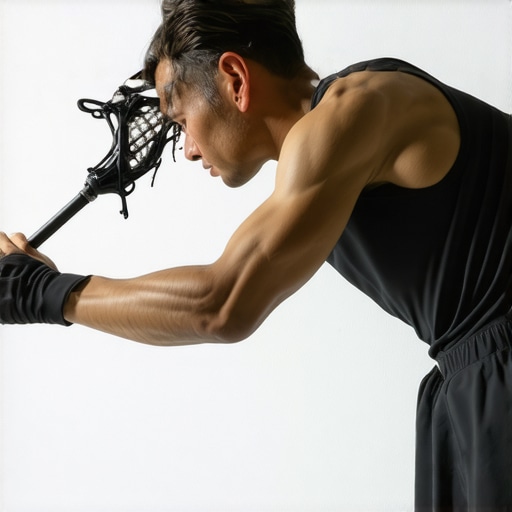
The Future of Personal Rehab Technology
We are moving toward an era where biofeedback will be as common as a heart rate monitor. I predict that within the next five years, we’ll see wearable sensors that vibrate when your pelvis tilts into a high-strain position during a squat or when your head drifts too far forward at your desk. This real-time data will allow us to catch micro-traumas before they turn into macro-injuries. For now, we have to rely on our internal ‘body map’ and professional guidance to enhancing athletic performance with targeted chiropractic care. The goal isn’t just to be ‘pain-free’—it’s to be robust. I want you to try one thing this week: spend two minutes using a lacrosse ball on the ‘meaty’ part of your upper back between your shoulder blades. It’s a simple way to reset your posture and prove to your nervous system that you’re in control. If you’re serious about never going back to that ‘jagged glass’ feeling in your heel or that dull ache in your spine, it’s time to stop guessing and start measuring your movement quality.
The Hard Truths About What Really Heals
Reflecting on my own journey and the hundreds of patients I’ve seen find relief, a few ‘lightbulb moments’ stand out. One of the biggest shifts was realizing that rest is often not the solution—active recovery is. If you simply sit on the couch, your joints get ‘sticky’ and your muscles forget their supporting roles. I have found that to truly boost your sports rehab journey with proven chiropractic strategies, you must be a proactive participant in your own care. Another hard-earned lesson: those ‘tight’ muscles in your lower leg are often just weak ones trying to do too much work because your glutes are offline. When I stopped stretching the symptoms and started stabilizing the system, the pain finally stayed away for good.
#IMAGE_PLACEHOLDER_E#
Items I Actually Use to Stay Pain Free
You do not need a garage full of expensive gadgets to maintain your progress, but a few specific tools are non-negotiable in my routine. I trust the evidence-based methods of experts like Dr. Stuart McGill because they prioritize spinal integrity over fitness fads. My ‘toolkit’ includes a standard high-density lacrosse ball for localized pressure and a firm yoga block for postural drills. Beyond the gear, I rely on discover how chiropractic adjustments can alleviate chronic back pain as a periodic check-in to ensure my pelvis and spine remain level. If you are ever unsure whether a new ache is a setback or just part of the process, it is vital to learn how to tell the difference between muscle soreness and a real injury so you can train with confidence.
Reclaim the Way You Move Every Day
The journey back from that lightning bolt of heel pain or a stiff lower back is not about finding a single miracle cure; it is about building a more robust version of yourself. Whether you are learning how to manage a flare up of chronic lower back pain or finally addressing the biomechanical flaws in your gait, every intentional movement counts. You deserve to wake up without the dread of those first few steps. It takes patience and the right structural support, but a life where you are not constantly distracted by pain is well within your reach. Have you ever felt like you were following all the ‘rules’ of stretching only to find your pain getting sharper? Let me know in the comments below—I would love to help you troubleshoot.