
I was hunched over my keyboard, trying to finish an email, when it hit me. A sharp, burning sensation right between my shoulder blades. I did what most people do—I reached back and tried to dig my thumb into the ‘knot.’ It felt like a rock. I spent the next week aggressively rolling on a lacrosse ball, convinced I just had a tight muscle. I was wrong. I was so wrong it actually makes me cringe thinking about it now. My mistake was assuming that because it felt like a muscle, it had to be a muscle. But no matter how much I smashed that tissue, the pain returned within an hour. That is because I was ignoring the frame the muscle hangs on. Your ribs aren’t just a cage; they are dynamic joints that need to move. When one of them gets stuck or ‘dysfunctional,’ your brain sends a pain signal that feels exactly like a stubborn muscle knot. Today, we are going to stop guessing and start looking at the skeletal culprits behind your discomfort. [image_placeholder]
Stop Chasing the Knot Under Your Shoulder Blade
You know that specific spot? The one that feels like a hot poker? It’s tempting to think a massage is the cure. I used to spend a fortune on deep-tissue sessions only to walk out feeling exactly the same. The truth is that the real cause of that burning sensation between your shoulder blades is often a rib that has lost its ability to glide. Every time you take a breath, your ribs should move like bucket handles. If one is stuck, the muscles around it—your rhomboids and traps—have to work overtime to compensate. They get tired. They get tight. And then, they scream at you. I spent months trying to stretch my way out of a joint problem. It doesn’t work. You can’t stretch a bone back into its proper rhythm.
Is rib pain actually worth the hype?
I get it. It sounds a bit ‘alternative’ to blame your ribs for back pain. You might be thinking, ‘Isn’t it just bad posture?’ While posture plays a role, focusing only on how you sit is like trying to fix a car’s alignment by just washing the windshield. Rib dysfunction is a very real, very physical mechanical block. If you have ever felt a sharp pinch when you take a deep breath or felt like you had a rib mobility issue that mimics chest tightness, you aren’t imagining things. Research published in the Journal of Manipulative and Physiological Therapeutics indicates that costovertebral joint dysfunction—where the rib meets the spine—is a frequently overlooked source of thoracic pain that can even mimic more serious internal conditions. It is worth the ‘hype’ because addressing it is often the only way to get lasting relief.
The Mistake I Made That Kept Me Hurting
Early in my journey, I fell into the trap of thinking I could just crack your mid-back on a foam roller and call it a day. I thought that ‘pop’ meant everything was fixed. It wasn’t. I was just hyper-mobilizing the joints above and below the one that was actually stuck. I also completely ignored how rib flare was affecting my core stability. By the time I sought strategic chiropractic solutions for long-term back health, my nervous system was so wound up I couldn’t even sit through a movie without squirming. Have you ever felt like you’re just ‘managing’ the pain rather than actually fixing it? Tell me in the comments what your go-to stretch is, and let’s see if we can figure out why it might be failing you. We’re going to dive into the specific mechanics next, so you can stop rolling and start recovering.Think of your rib cage like an accordion. If one of those folds gets glued shut, the whole instrument sounds off. Years ago, I was so desperate to fix a ‘stuck’ sensation that I had a 200-pound friend walk on my back while I lay on the living room floor. I heard a loud crack, but instead of relief, I spent forty-eight hours unable to twist my torso without gasping. I was treating a delicate mechanical system like a rusted door hinge. The secret isn’t force; it is restoring the natural ‘glide’ that allows your ribs to move with your lungs. Before you pick up that massage gun, you need to learn how to tell if that knot in your back is a trigger point or a joint that has actually seized up. If the bone isn’t moving, the muscle will never relax. 
The Accordion Effect: Why Joints Rule Over Muscles
To get your back moving again, you have to address the rib-to-spine connection. These are called costovertebral joints. When they get ‘stuck,’ they don’t just stay still; they create a protective spasm in every muscle nearby. This is where the science behind chiropractic adjustments for back pain relief becomes your best friend. A targeted adjustment acts like a reset button for the nervous system, telling those guarded muscles that the ‘threat’ is gone. If you have been aggressively digging into your traps, you have likely noticed the relief only lasts until you sit back down at your desk. That is because the joint is still jammed. Learning how to use a lacrosse ball for better thoracic mobility is great for maintenance, but if the rib is significantly misaligned, you are just bruising your muscles while the bone stays put.
Test Your Ribs to Save Your Core
One of the biggest red flags for rib issues is what we call ‘rib flare.’ If your lower ribs stick out like a shelf when you reach overhead, your core is not working as a unit. I used to think I just had weird anatomy until I learned the simple test for rib flare and why it matters for your core. When your ribs are flared, your diaphragm is tilted, making it impossible to get a full, deep breath. This mechanical inefficiency forces your upper back muscles to lift your entire rib cage just so you can get oxygen. No wonder they feel like they are burning! You are essentially doing 20,000 ‘mini-shrugs’ a day just to breathe. This is a common hurdle in the role of chiropractic care in effective sports injury recovery because if you cannot breathe right, you cannot brace right under a barbell.
Breathe Like a Pro to Unlock Stuck Ribs
The first actionable step to fixing this is ‘Piston Breathing.’ Instead of breathing into your neck and shoulders, imagine your rib cage expanding 360 degrees, like an umbrella opening. Put your hands on the sides of your lower ribs and try to push your palms out as you inhale. This pressure from the inside out is often the only thing that can nudge a stubborn rib back into its proper rhythm. When combined with strategic chiropractic solutions for long-term back health, this breathing pattern ensures that once the joint is mobile, it stays that way. I spent years fighting my own body because I did not realize that my breath was the very tool I needed to keep my spine aligned.
Despite what the fitness influencers tell you, you cannot always stretch your way out of pain. In fact, if your issue is a mechanical joint block, leaning harder into your daily mobility routine might be the very thing keeping you stuck. I see it every week: a patient comes in who has been doing ‘world’s greatest stretches’ for months, yet their mid-back feels like it’s encased in concrete. This happens because more stretching often leads to more sensitivity. When a rib joint isn’t moving, your brain perceives a lack of stability. In response, it tightens the surrounding muscles to act as a splint. If you try to force those muscles to relax through aggressive stretching, your brain simply turns the tension dial up even higher to protect the spine. This is why why your morning stretches might be making your back more sensitive rather than providing the relief you crave.
The Self-Cracking Trap That Keeps You Hurting
We have all been there—the desperate need to twist until something clicks. But here is the nuance most people miss: you aren’t actually cracking the joint that is stuck. You are cracking the ‘hypermobile’ joints above and below it. These joints are already moving too much because they are trying to compensate for the frozen rib. Every time you self-manipulate, you provide a temporary hit of endorphins, but you are effectively making the stable parts of your spine unstable while the actual culprit stays locked. This is the ultimate ‘oops’ factor in home care. If you find yourself needing to ‘pop’ your own back every twenty minutes, you are stuck in a cycle of instability. It is the same reason why you should stop cracking your own neck for relief and seek a targeted intervention that addresses the specific segment that won’t budge. 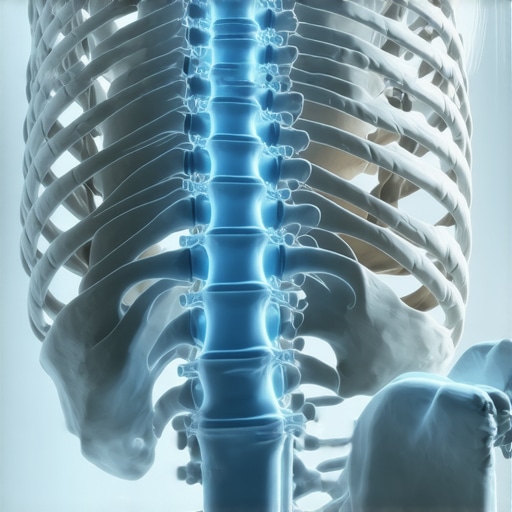
Does a loud ‘pop’ always mean the joint is fixed?
It is a common myth that the louder the sound, the better the adjustment. In reality, the science behind that popping sound in your joints is simply a gas pressure change called cavitation. While it feels satisfying, the real magic of a clinical adjustment isn’t the noise; it’s the neurological ‘reset.’ A study published in the Journal of Electromyography and Kinesiology demonstrated that spinal manipulation significantly reduces the ‘alpha-motoneuron’ activity—basically, it tells the overactive, spasming muscles to finally stand down. If you are just chasing the sound, you are missing the point of unlocking back pain relief through expert chiropractic adjustments. Have you ever fallen into this trap of thinking a louder ‘crack’ meant a better result? Let me know in the comments.
Why Yoga Might Be Making Your Rib Pain Worse
I love yoga for its mindfulness and balance, but for people with rib dysfunction or hypermobility, it can be a minefield. If you have joints that are naturally ‘bendy,’ you might be dumping all the stress of a pose into your thoracic spine instead of using your muscles. This is why your yoga practice might be aggravating your hypermobility. You need to focus on stability and ‘hugging the bone’ with your musculature rather than just sinking into the end-range of a stretch. In the world of high-level athletics, we often have to shift the focus from ‘more range’ to ‘better control.’ This is a core pillar in the truth about no pain no gain in sports rehab—pushing through a sharp pinch in your rib cage isn’t ‘working the muscle,’ it’s irritating a joint capsule. Stop trying to win a gold medal in stretching and start focusing on the quality of your movement. If it pinches, your body is telling you to stop, rethink the mechanics, and find the ‘glide’ rather than the ‘grind.’
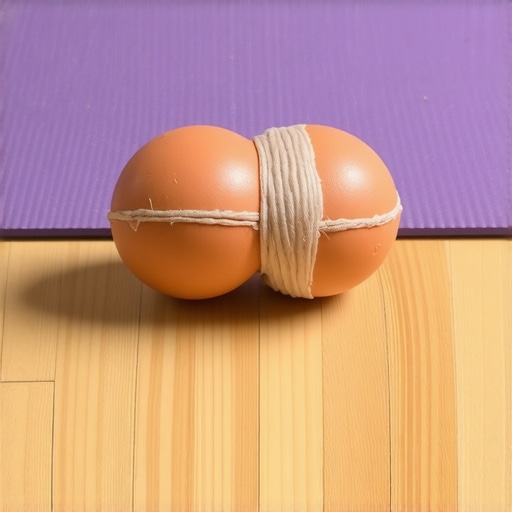
Once you stop the cycle of panic-stretching and self-cracking, you have to decide how you’re going to stay in the clear. I used to be terrified that one wrong move at my desk would send me back to square one. But maintenance isn’t about being perfect; it’s about having a toolkit that works faster than your bad habits. I don’t go a day without my ‘peanut’—two lacrosse balls taped together. This specific shape is non-negotiable because it cradles the spine while the balls press into the paraspinal muscles. It’s the only way I’ve found to effectively implement how to use a lacrosse ball for better thoracic mobility without feeling like I’m bruising my vertebrae. If you are serious about strategic chiropractic solutions for long-term back health, you need to treat your home mobility sessions like a professional appointment.
The Simple Gear That Saved My Spine
Beyond the peanut, I’ve become an advocate for lumbar supports that actually match your spine’s natural curve. I see too many people using a rolled-up towel that just flattens out in ten minutes. I personally use a high-density foam roll that clips to my chair. It forces my pelvis into a slight anterior tilt, which prevents the ‘slump’ that leads to rib flare. This is a foundational part of essential tips for managing back pain through healthy lifestyle choices because your environment dictates your posture more than your willpower ever will. When your low back is supported, your mid-back doesn’t have to work as hard to keep your head upright. I’ve also integrated the exact height your armrests should be for neck health into my home office, which stopped my traps from over-firing and pulling on my upper ribs every time I reached for my mouse.
How can I stay pain-free for the long haul?
Consistency beats intensity every single time. You don’t need a ninety-minute yoga flow; you need three minutes of focused movement every few hours. Dr. Stuart McGill, a leading expert in spinal biomechanics and author of Back Mechanic, notes that ‘spinal hygiene’ is just as important as dental hygiene. If you wouldn’t skip brushing your teeth, don’t skip your strategic chiropractic solutions for long-term back health. I predict that in the next five years, we will see a massive shift toward wearable EMG biofeedback sensors in everyday clothing. Imagine a shirt that vibrates when your rhomboids go quiet and your traps take over—that’s the level of awareness we’re heading toward. Until then, you have to be your own sensor. This is why the role of chiropractic care in effective sports injury recovery is shifting from just ‘fixing’ things to teaching athletes how to listen to these subtle mechanical shifts before they become full-blown injuries.
If you want to stay ahead of the curve, you need to master the correct way to brace your core for heavy carries, even when that ‘heavy carry’ is just a bag of groceries or a toddler. Most rib issues return because we move ‘leaky.’ We let energy escape through a flared rib cage instead of keeping the torso stiff and the limbs mobile. I want you to try one thing tonight: get on your ‘peanut’ or a foam roller and focus solely on breathing into the tool. Don’t just roll back and forth like a piece of dough; find the tight spot, stay there, and use that 360-degree breath to push the rib from the inside out. It’s a game-changer for unlocking back pain relief through expert chiropractic adjustments because it prepares the tissue for the real work. If you can move your ribs with your breath, you can move them through anything.
Hard-Won Lessons from My Fight with Rib Dysfunction
Looking back on the years I spent chasing ‘knots,’ there are a few lightbulb moments that changed everything for me. First, I realized that pain is a messenger, not an enemy. When my rhomboids were screaming, they weren’t the problem—they were just the alarm system for a stuck rib. I also learned that trying to force a joint to move through sheer willpower is a recipe for a flare-up. If you find yourself in a cycle where your morning stretches are making your back more sensitive, it is a clear sign that your nervous system is in protective mode. The biggest shift occurred when I stopped treating my body like a collection of parts and started seeing it as a mechanical system where the spine and ribs must dance together. Understanding the science behind chiropractic adjustments for back pain relief helped me see that the ‘pop’ is less about the sound and more about giving the brain permission to let go of that muscle guarding.
The Essential Gear for a Spine That Doesn’t Snap
You don’t need a gym full of equipment to maintain rib mobility, but a few specific tools are non-negotiable. I personally swear by the ‘peanut’ method; learning how to use a lacrosse ball for better thoracic mobility is the single most cost-effective way to manage mid-back tension at home. I also recommend looking at your foundation. It sounds unrelated, but picking the right mattress for your spine type can prevent the overnight stiffness that makes ribs feel ‘stuck’ the moment you wake up. Finally, for my fellow office workers, investing in a high-quality lumbar support that prevents the ‘slump’ is vital. If your environment isn’t set up for success, your ribs will eventually pay the price through flare-ups and decreased lung capacity.
Start Moving Without the Constant Burn
Transitioning from ‘managing pain’ to ‘living mobile’ is a journey, but it starts with a single decision to stop guessing. You deserve to take a deep breath without feeling a sharp pinch or a dull ache. By focusing on strategic chiropractic solutions for long-term back health, you shift the focus from temporary relief to permanent mechanical improvement. Don’t let a ‘stubborn knot’ dictate how you sit, breathe, or play. Your body is incredibly resilient once you give it the right inputs and the space to heal. [image_placeholder]
Have you ever spent weeks rolling out a specific ‘knot’ only to find that it never actually goes away? Let me know your experience in the comments below—I would love to help you figure out if a rib might be the secret culprit.