
I remember the exact moment I realized my three-thousand-dollar sectional was my biggest enemy. I had just finished a great session at the gym, focusing on strategic chiropractic solutions for long-term back health, and I felt invincible. I grabbed a glass of water, flopped onto the middle cushion, and within fifteen minutes, my right leg felt like it was being plugged into a faulty electrical socket. It was a visceral, stinging realization: my “relaxation” was actually a slow-motion injury. I used to think the answer was more pillows, more padding, and deeper seats. I was wrong. I was actually suffocating my sciatic nerve by letting my pelvis collapse into the upholstery. Today, we are going to fix that. I’m going to show you exactly why that couch is triggering your pain and the simple adjustments you can make to finally sit without fear.
Your Soft Sofa is a Sciatic Nerve Trap
When we sink into a plush couch, we feel comfortable because our muscles can completely shut off. But that’s the problem. When your muscles stop supporting you, your ligaments and spinal discs take the full load. This usually results in a posterior pelvic tilt—a fancy way of saying your tailbone is tucked under and your lower back is rounded like a frightened cat. This position stretches the sciatic nerve and pinches it between the discs and the surrounding tissue. I made the mistake of thinking why bed rest is the worst thing for acute back spasms was the solution for years, only to find it made my flares more frequent. It’s not just about the “c” curve in your spine, either. Soft surfaces provide zero feedback to your brain about where your joints are in space. According to the Mayo Clinic, maintaining the natural inward curve of your lower back is crucial for preventing nerve impingement, yet most couches are designed to flatten that curve entirely. If you’ve noticed your office chair makes your sciatica worse, your couch is likely doing double the damage because it is even less supportive. Have you ever stood up from a movie and felt like you aged twenty years in two hours? Drop a comment or reach out to us at our contact page if you have faced this specific struggle.
Is This Advice Actually Worth the Hype?
I get it—skepticism is natural. You don’t want to turn your living room into a sterile doctor’s office. You might wonder if spending money on “lumbar support” or “firm-density foam” is just a marketing gimmick. I used to think so, too. I thought I could just “posture” my way out of a bad chair. But the reality is that essential lifestyle choices include the environment you spend four hours in every night. You wouldn’t run a marathon in flip-flops, so why expect your spine to handle a Netflix marathon without the right gear? If you’re tired of the fire in your leg, it’s time to stop fighting your furniture.
How to Reclaim Your Living Room Without Buying New Furniture
I didn’t throw my couch away, though I came close to taking a chainsaw to it more than once. Instead, I started treating my seated time like an athletic recovery session. If you want to stop the stinging in your leg, you have to stop the mechanical collapse. Think of your pelvis like a bucket of water. When you sink into a soft cushion, the bucket tips backward, spilling water toward your spine and stretching the sciatic nerve like a taut rubber band. To fix this, you need to find a way to tip that bucket forward again.
Stop Letting Your Pelvis Tip Like an Overfilled Bucket
The first rule is simple: your hips must be higher than your knees. When your knees are higher than your hips—the standard position in most deep sectionals—it forces the lower back into a rounded shape. I once spent a whole weekend trying to ‘relax’ my way out of a flare-up, only to realize my knees were practically at chin level while I sat on a beanbag-style cushion. It was a disaster. I ended up having to crawl to the kitchen for water because my nerve was so irritated. Now, I use a firm wedge or even a stack of folded yoga mats to elevate my seat. This elevation mimics the benefits found in the science behind chiropractic adjustments for back pain relief by restoring the natural curve of the lumbar spine.
Build a Temporary Support System with What You Have
You don’t need to spend five hundred dollars on an ergonomic chair if you can master the lumbar roll. Grab a firm bath towel, roll it up tight, and secure it with rubber bands. Place this roll exactly at the small of your back. This creates a bridge over the ‘sag’ of the couch. This is one of those essential lifestyle choices that separates people who heal from those who just manage pain. Without that roll, your spine is basically a suspension bridge with no cables. I found that even on the softest cushions, a firm roll against my vertebrae gave me the leverage to sit for thirty minutes without that familiar electric hum starting in my glutes. It works because it prevents the disc from bulging posteriorly toward the nerve root, much like expert chiropractic adjustments that work to create space in the joint.
The 20-Minute Rule for Nerve Decompression
No matter how many pillows you use, stillness is a slow poison for your nerves. If you’ve noticed why your sciatica gets worse when you drive long distances, you’ve experienced what I call ‘static loading.’ Your nerve needs blood flow and movement to stay happy. I set a timer on my phone for twenty minutes. When it goes off, I perform the simple move to reset your hips after a long drive right there in the living room. It involves standing up, tucking the tailbone, and doing a gentle hip flexor stretch. This resets the neural tension. If you wait until it hurts to move, you’ve already lost the battle for that day.Most people think the answer to a tight back is to stretch until the cows come home. In reality, why your morning stretches might be making your back more sensitive is one of the most common complaints I hear in the clinic. When you have sciatica, that ‘pulling’ sensation in your leg isn’t just a tight muscle; it’s a sensitized nerve. Tugging on a nerve is like pulling on a live wire; it doesn’t get longer, it just gets angrier. I’ve seen patients spend months in a cycle of stretching and screaming, never realizing they are actually ‘tethering’ the nerve. In my experience, the more you fight the nerve, the more the nerve fights back. Have you ever fallen into this trap where stretching makes you feel worse the next day? Let me know in the comments.
Can you actually tell the difference between a tight muscle and a trapped nerve?
This is the advanced question that separates a quick recovery from a chronic struggle. If you feel a ‘stretch’ that is sharp, electric, or travels down past your knee, you aren’t stretching a muscle—you’re tensioning a nerve. A study published in the Journal of Orthopaedic & Sports Physical Therapy (JOSPT) highlights that ‘neurodynamic’ movements, which slide the nerve without over-tensioning it, are significantly more effective for radiating pain than traditional static stretching. This is why why your hamstrings always feel tight is often a brain-level protective response rather than a physical length issue. If your brain thinks the sciatic nerve is at risk, it will keep those hamstrings locked tight as a ‘biological brake’ to prevent you from over-extending the nerve.
Stop chasing the pain and start chasing the source
The biggest ‘oops’ factor I see in sports rehab is the obsession with the site of the pain. If your glute hurts, you foam roll the glute. If your calf is burning, you stretch the calf. But if the issue is a disc protrusion in your lumbar spine, you’re just treating the symptoms while the fire continues to burn at the source. This is where boost your sports rehab journey with proven chiropractic strategies becomes a game changer. We need to create mechanical space at the spinal level so the nerve has room to breathe. If you’ve been told to ‘just push through it,’ remember that the truth about no pain no gain in sports rehab is that nerves do not play by those rules. Provocation leads to inflammation, which leads to more pain. Instead of aggressive stretching, we utilize the best exercises for rebuilding strength after a disc bulge that emphasize spinal neutral and core stability. By combining these with chiropractic adjustments that alleviate chronic back pain, we address the structural cause rather than just the muscular symptom. When you stop treating your body like a collection of isolated parts and start treating it as a single, connected system, the path to sitting without pain becomes much clearer.But once you’ve cleared that initial fog of pain, the real work begins. I call this phase the ‘Spine Hygiene’ era—a term popularized by world-renowned spine biomechanist Dr. Stuart McGill. He argues that back health isn’t about one heroic 60-minute workout; it’s about the hundreds of tiny decisions you make between 8 AM and 10 PM. If you successfully use strategic chiropractic solutions for long-term back health but then go home and slouch for six hours, you’re essentially trying to bail out a sinking boat with a teaspoon. You need to automate your environment so you don’t have to think about your posture every second of the day.
How do I maintain a pain-free back over time?
The secret isn’t more intensity; it’s more consistency. I tell my patients that maintenance is like brushing your teeth—you don’t wait for a cavity to start using a toothbrush. For me, this means mastering how to manage a flare-up of chronic lower back pain before it actually happens. I’ve integrated a ‘movement snack’ every hour. It’s not a full workout; it’s just 60 seconds of decompression. This is how you boost your sports rehab journey with proven chiropractic strategies—by making the clinical work stick in the real world.
Ditch the Fancy Gadgets for This Specific Support Tool
If you look in my car or my office, you won’t find a thousand-dollar ‘ergonomic’ chair. Instead, you’ll find a very specific high-density foam roll. I use the McKenzie Lumbar Roll specifically because it has a high enough density that it actually maintains the lordotic curve even in deep bucket seats. I’ve tried the cheaper versions, but they bottom out after a week. This tool is non-negotiable for me whenever I have to set up a home office in a small space. It forces my lumbar spine into a position where the discs are loaded anteriorly, which is the exact opposite of the ‘pelvic collapse’ we talked about earlier. 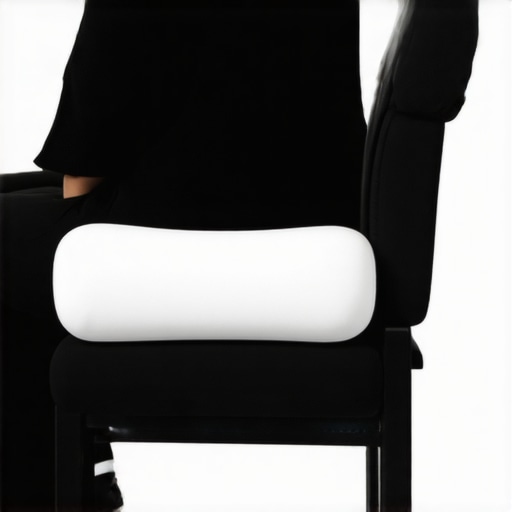
The Future of Back Health is Hidden in Your Wearables
I predict that within the next five years, we are going to see a massive shift toward real-time biofeedback. We already track our heart rate and sleep, but soon, we’ll have thin-film sensors in our clothes that vibrate the moment our lower back enters that dangerous posterior tilt. This will change everything because it removes the ‘forgetfulness’ factor. Until then, you have to be your own sensor. I highly recommend starting with the 4-step morning routine for chronic lower back stiffness to prime your joints before the day’s stress hits. Don’t wait for the fire to start; try the ‘pelvic bucket’ elevation trick tonight while you watch TV and see if that electric hum finally stays quiet. If you’re struggling to find the right balance, reach out to us through our contact page so we can tailor a plan specifically for your anatomy.
The Hard Truths I Discovered While Rebuilding My Spine
Looking back at my journey from the ‘electric leg’ to pain-free living, I realized that the biggest hurdle wasn’t my physical injury, but my own habits. I spent years assuming that comfort meant health. The reality? True spinal health often feels a bit ‘stiff’ at first because your muscles are actually working. I also learned that why your hip flexors are still tight after a year of stretching usually comes down to that seated pelvic tilt we discussed—if you don’t fix the seat, you can’t fix the muscle. Another ‘lightbulb’ moment was realizing that why your shoes are wearing out unevenly can actually be a clue that your pelvic alignment is shifting to protect your sciatic nerve. Your body is always talking to you; you just have to learn the language.
My Bulletproof Back Toolkit
I don’t believe in cluttering your home with gadgets, but these specific items changed everything for me. First, a high-density McKenzie Lumbar Roll is non-negotiable for any soft surface. Second, I keep a simple lacrosse ball nearby to work on glute tension—it’s much more precise than a foam roller. #IMAGE_PLACEHOLDER_E# Third, I highly recommend tracking your progress with a movement journal to see how how spinal alignment affects your balance and stability over several weeks. Finally, nothing beats having a professional eye. If you are stuck, don’t hesitate to contact us or explore revolutionize your rehab chiropractic techniques for faster recovery to get a head start on your healing.
A Future Where You Sit Without Fear
You don’t have to live in a world where your living room feels like a minefield. Sciatica is a loud, scary signal, but it is also a roadmap. By adjusting how you sit, moving frequently, and seeking strategic chiropractic solutions for long-term back health, you are taking control of your quality of life. Don’t let a soft cushion dictate your future mobility. You’ve got the tools and the knowledge—now it’s just about putting them into practice, one ‘movement snack’ at a time. Have you tried the towel roll trick on your sofa yet, or do you have another hack that helps you sit without that stinging pain? Let me know in the comments below!