
I was thirty-two years old, sitting at my desk, when I felt a sharp, restrictive squeeze in the center of my chest that stopped me dead in my tracks. It felt like a vice was tightening around my lungs. I did what most people would do: I panicked, convinced I was having a heart attack. After six hours in the ER and a battery of tests that came back perfectly clear, I was sent home with a shrug and a ‘maybe it’s stress.’ But the tightness didn’t leave. It lingered for weeks, making every deep breath feel like a chore. It wasn’t until a chiropractor finally poked around my mid-back and found a rib that had literally stopped moving that the lightbulb finally went off. Today, I’m going to show you why that ‘stuck’ feeling isn’t always about your heart or your lungs, and how we can actually get those joints moving again.
The Moment I Realized My Lungs Weren’t the Problem
When that chiropractor adjusted my thoracic spine, I felt an immediate, cold rush of air fill my lungs for the first time in months. It was visceral. I realized then that my ribs aren’t just static cages protecting my heart; they are a complex series of joints that have to hinge every time we inhale. If you’ve been feeling a similar restriction, you might have noticed that your rib cage feels stuck when you take a deep breath, especially during exercise or stressful moments. Early on, I made the classic mistake of thinking I just needed to stretch my chest more. I spent hours doing ‘doorway stretches,’ but I was actually just irritating the front of my ribs because the restriction was actually in my back. It’s a common trap: we treat the symptom (chest tightness) instead of the cause (posterior rib dysfunction). Have you ever felt like you just couldn’t get a full breath, no matter how hard you tried?
Is this just a fancy way to sell adjustments?
It sounds a bit convenient, doesn’t it? The idea that a joint in your back can cause pain in your chest seems like a reach until you look at the anatomy. Each rib attaches to your spine at two different points. If those hinges get ‘rusty’ or stuck due to poor posture or a sudden movement, the whole system grinds to a halt. In fact, research published in the Journal of the American Osteopathic Association suggests that rib dysfunction is a leading cause of non-cardiac chest pain, often overlooked in traditional medical settings. This isn’t just about ‘cracking’ your back; it’s about restoring the mechanical rhythm of your breath. Learning how chiropractic adjustments can help your breathing changed the way I looked at my own fitness. You can also try the simple test for rib flare to see if your core is actually compensating for this lack of mobility. If we don’t address the hinges, we’re just fighting a losing battle against our own anatomy.
Stop Sucking It In and Start Breathing Down
The most immediate way to stop the “stuck” feeling is to change the way you move air. Most of us breathe like we’re perpetually startled—our shoulders shrug, our necks strain, and our ribs pull upward. This is “chest breathing,” and it keeps your rib joints under constant, unnecessary tension. To fix this, you have to relearn how to use diaphragmatic breathing to calm your nervous system. Think of your torso like a cylinder; when you inhale, that cylinder should expand 360 degrees, not just push out the front of your chest. I remember the first time I tried this after my rib injury. I was lying on my living room floor with a heavy book on my belly, watching it rise and fall. It felt clunky and forced at first—like trying to write with my non-dominant hand—but after five minutes, that sharp “catch” in my mid-back started to soften. You can’t force a joint to relax if the muscles around it are screaming for oxygen. If you’re constantly bracing, how your breathing mechanics are sabotaging your core strength becomes very obvious very quickly.
Break Through the Stiffness with a Lacrosse Ball
Once you’ve calmed the nervous system, you need to address the mechanical “rust” on those posterior rib joints. A foam roller is often too blunt for this job; it’s like trying to do surgery with a hammer. Instead, you need something pinpoint. Learning how to use a lacrosse ball for better thoracic mobility is the closest you can get to a self-adjustment. The goal isn’t to roll around aimlessly. You want to place the ball right between your spine and your shoulder blade—the “sweet spot” where those ribs attach.  I once spent a grueling thirty minutes in a hotel room trying to “roll out” a rib that had flared up during a flight. I made the mistake of pressing too hard right on the bone, which just made it bruise. The breakthrough happened when I backed off the pressure and focused on small, rhythmic arm movements while the ball stayed still. This “pin and stretch” method creates space where there was none. By targeting the specific joint capsule, you’re facilitating unlocking back pain relief through expert chiropractic adjustments principles on your own floor.
Stop Fighting Your Desk and Fix Your Shoulders
If you fix the joint but keep the habit that stuck it in the first place, the pain will be back by Monday morning. Most rib restrictions are “desk-born.” When your arms reach forward for a mouse or a keyboard, your shoulder blades slide away from your spine, stretching the muscles that hold your ribs in place. Over time, these muscles fatigue, and the joints lock up to provide the stability your muscles can no longer manage. You need to know how to fix rounded shoulders from years of desk work to give your ribs a fighting chance. This isn’t just about “sitting up straight,” which usually just leads to more tension. It’s about integrating essential tips for managing back pain through healthy lifestyle choices into your environment. I eventually realized that my monitor was too low, forcing me into a slight crunch all day. Raising that screen by just three inches did more for my breathing than any stretch ever could.But here is the nuance that most people—and even some practitioners—miss: stiffness is not always a short muscle problem. Often, it is a protective tone problem. Your brain senses instability or past trauma in those rib joints and decides to clamp down the surrounding muscles like a biological splint. If you try to stretch through that splint, your brain just clamps down harder. This is exactly why your morning stretches might be making your back more sensitive instead of loose. You are essentially tugging on a knot that the nervous system is trying to keep tight for your own protection. To break this cycle, we have to stop treating the body like a series of pulleys and start treating it like a sophisticated communication network.
Is Your Core Bracing Secretly Killing Your Mobility?
Most of us were told to suck it in or brace your core to protect our backs. However, constant, aggressive bracing creates a rigid canister that prevents the ribs from expanding properly. When you over-brace, you lose the ability to rotate and breathe, which ironically puts more pressure on the very joints you are trying to protect. This nuance is central to revolutionize your rehab chiropractic techniques for faster recovery. True stability is not a statue; it is a controlled, fluid dance between tension and relaxation. A study published in the Journal of Bodywork and Movement Therapies suggests that the feeling of stiffness often correlates more with emotional stress and nervous system arousal than with actual muscle length. If you are always on, your ribs will always feel stuck.
The Dangerous Trap of Chasing the Pop
We have all been there—twisting in our office chairs until we hear that satisfying crack. While it feels like a temporary release, there is a massive difference between a targeted adjustment and self-cracking. When you crack your own back, you are usually hitting the joints that are already hypermobile (moving too much) while the stuck joints remain frozen. This creates a cycle of temporary relief followed by even more instability. Understanding the science behind that popping sound in your joints is crucial because if you keep hitting the wrong spots, you are actually wearing down your ligaments. 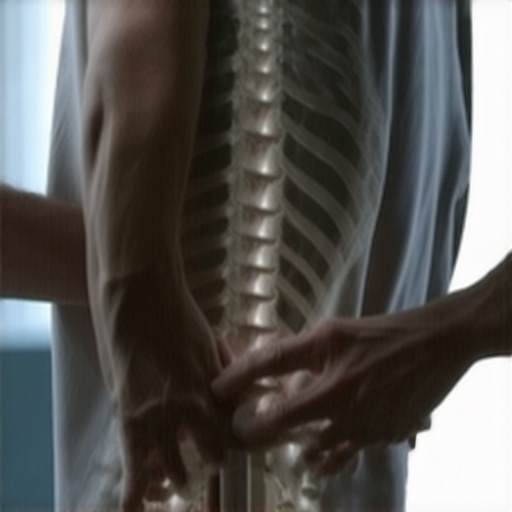 I see this all the time in athletes who try to bypass the recovery process. They mistake noise for movement. But in reality, the truth about no pain no gain in sports rehab is that the quiet, controlled mobilizations often do the heavy lifting for long-term health. Have you ever fallen into the trap of stretching a pain that just would not go away? Let me know in the comments.
Why You Need a Movement Specialist Instead of a Quick Fix
People often ask about the real difference between a chiropractor and a pt when it comes to rib and back issues. The truth is, the best approach integrates both. You need the adjustment to clear the physical joint restriction, but you need the rehab to retrain the brain to trust that new range of motion. Without the retraining, your nervous system will just go back to its default splinting mode by the time you reach your car. It is about building a foundation for strategic chiropractic solutions for long-term back health rather than just looking for a band-aid for a single symptom. When we address the mechanical restriction and the neurological habit at the same time, the results are not just fast—they are permanent.I have spent a small fortune on fancy gadgets over the years, but the most effective tool in my recovery kit is actually a simple double-lacrosse ball, often called a ‘peanut.’ I keep one in my laptop bag and one by my bed. The reason I swear by this specific tool is the gap in the middle; it allows me to apply pressure to the muscles and rib attachments without putting direct, painful force on the spinous processes of my vertebrae. It’s my go-to for daily maintenance. I’ve found that using this for just three minutes every evening helps me stay on track with strategic chiropractic solutions for long-term back health. If you are currently working from a kitchen table or a cramped corner, you absolutely must learn how to set up a home office in a small space without ruining your back, because even the best adjustment can’t compete with eight hours of poor ergonomics. I also rely on a simple breathing app to prompt me for ‘rib-cage-expansion’ breaks every two hours. It sounds trivial until you realize that how a weak core actually causes chronic neck tension is a direct result of the shallow, panicked breathing we do when we are stressed at our desks.
How do I maintain my rib and back mobility over time?
Consistency is the only way to make these changes stick. I personally follow a ‘check-in’ routine every morning before I even have coffee. I do a quick overhead reach to see if my ribs feel ‘hinged’ or if I’m arching my lower back to compensate. If I feel that familiar restriction, I immediately go to my floor routine. This isn’t just about feeling good; it’s about enhancing athletic performance with targeted chiropractic care principles by ensuring my ‘engine’ (my lungs and core) has the space it needs to operate. Dr. Stuart McGill, a world-renowned expert in spine biomechanics and author of Back Mechanic, emphasizes the importance of ‘spinal hygiene’—the idea that we must move in ways that respect our anatomy throughout the day, not just during a workout. He teaches that the core should act as a stiffener to allow the limbs (and ribs) to move freely. 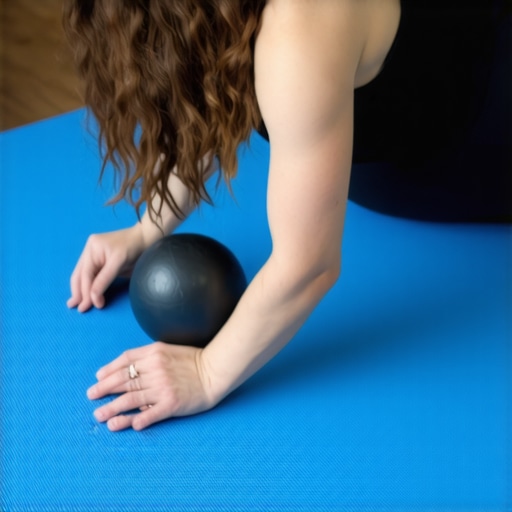 Looking ahead, I suspect we are moving toward a world where biofeedback wearables will play a massive role in our recovery. We are already seeing sensors that can track thoracic rotation and rib expansion in real-time, sending a small vibration to your phone when you start to slouch or ‘shallow breathe.’ This kind of data-driven recovery is going to revolutionize your rehab chiropractic techniques for faster recovery because it bridges the gap between the clinic and your living room. Instead of guessing if your ribs are moving, you’ll see the metrics on your wrist. For those of us who have felt the panic of a ‘stuck’ rib, that kind of certainty is priceless. If you want to start right now, I challenge you to try the ‘wall slide’—stand with your back against a wall and try to keep your entire spine and arms in contact with the surface as you slide them up. If your ribs pop out, you’ve got work to do. Check out our guide on the role of chiropractic care in effective sports injury recovery to see how to integrate these checks into your training.
What I Learned While Fighting My Own Rib Joints
After years of dealing with that nagging, restrictive feeling in my chest, I realized that the body isn’t just a collection of parts; it is a defensive system. One of the biggest lightbulb moments for me was understanding that stiffness is often a ‘biological brake.’ If your brain thinks your spine is unstable, it will lock your ribs down to protect you. If you are currently struggling, knowing how to manage a flare-up of chronic lower back pain is the first step toward regaining control of that protective response. I also learned that the ‘pop’ is just a side effect, not the goal. The real win is when you can rotate and expand your chest without thinking about it. Lastly, I realized that my environment—the way I sat, the way I looked at my phone—was a constant input telling my ribs to stay tight. Fixing the input fixed the output.
The Tools That Keep My Spine Moving
#IMAGE_PLACEHOLDER_E# I don’t go anywhere without my ‘peanut’—a double lacrosse ball that fits perfectly on either side of the spine. It is the single most effective tool for targeting the specific joints where the ribs meet the vertebrae. I also highly recommend reading Dr. Stuart McGill’s work, specifically his focus on spinal hygiene, which changed how I move during mundane tasks like picking up groceries. For those looking to integrate these habits into a broader training plan, I recommend diving into boost your sports rehab journey with proven chiropractic strategies to understand the wider context of recovery. Finally, you can look into the science behind chiropractic adjustments for back pain relief to see why these mechanical interventions are so effective at ‘resetting’ the nervous system. These resources have been my roadmap to staying pain-free.
Take Your First Full Breath in Years
It is incredibly easy to feel defeated when every breath feels like you are fighting a restrictive vest. But remember, your body is capable of change, no matter how long you have felt ‘stuck.’ You don’t have to live with a restricted cage; you can discover how chiropractic adjustments can alleviate chronic back pain and restore your natural rhythm. Start small with the breathing drills, use the lacrosse ball to clear the ‘rust,’ and be patient with your nervous system. You are not broken; you are just temporarily locked. Have you ever felt that sharp ‘catch’ in your ribs that just won’t go away? Let me know in the comments.