
I will never forget the Tuesday afternoon my hand simply decided it had seen enough. I was halfway through a massive spreadsheet when a sharp, electric zing shot from the base of my palm all the way to my elbow. It was terrifying. I actually dropped my mouse, and for a second, I couldn’t even close my fist. I’d spent years ignoring the minor aches, thinking I was just ‘getting older’ or that it was the price of a desk job. I even started wondering if why your thumb pain is actually coming from your neck was the real culprit, but the truth was much simpler and much more embarrassing. I was reaching. Every single click was a micro-strain because my mouse was sitting six inches too far to the right. Today, I want to share the exact layout that saved my career and kept me out of a wrist brace. We are going to fix your setup so you can stop worrying about surgery and start focusing on your work again. Have you ever noticed that weird, dull ache in your forearm after only twenty minutes of clicking? Let me know in the comments if you’ve hit that ‘wall’ of pain like I did.
Don’t Put Your Mouse in the Danger Zone
I made a massive mistake early on by thinking that buying a fancy, $100 vertical mouse would solve everything. I spent the money, plugged it in, and… nothing changed. My wrist still throbbed. Why? Because I was still keeping the mouse way out to the side of my keyboard. My shoulder was permanently rolled forward, creating a chain reaction of tension. It wasn’t just my wrist that was suffering; I was also dealing with the real cause of that burning sensation between your shoulder blades. The ‘Danger Zone’ is anywhere that forces your elbow to leave your side. When you reach out for that mouse, you are engaging tiny muscles in your forearm that were never meant to hold that tension for eight hours a day. According to the Occupational Safety and Health Administration (OSHA), repetitive tasks performed in awkward postures are the primary drivers of musculoskeletal disorders in office environments. By simply pulling the mouse closer to the midline of my body—right next to the keyboard—the pressure on my carpal tunnel vanished almost overnight. It felt weird at first, like I was relearning how to use a computer, but the relief was undeniable.
Is ergonomic equipment just an expensive marketing scam?
I used to think so. I figured if I just had ‘stronger’ wrists, I wouldn’t have these problems. But the reality is that your body has physical limits. You can’t ‘out-strengthen’ a bad position. If you are constantly fighting against the height of your desk, you might also need to look at the exact height your armrests should be for neck health to ensure your whole arm is supported. When your arm is floating in mid-air, your wrist takes the brunt of the weight. We often focus so much on the hand itself that we forget the shoulder and chest are the anchors. If those are tight, your wrist is doomed. I highly recommend checking out how to fix rounded shoulders from years of desk work as part of your recovery. Once I opened up my chest and brought my mouse into my ‘neutral zone,’ the healing finally started.
Keep Your Mouse Inside the Frame
When you’re trying to figure out how to set up a home office in a small space without ruining your back, the first thing people sacrifice is mouse real estate. We tend to push the mouse to the right of a full-sized keyboard, which forces the shoulder into a ‘scarecrow’ position. I used to do this every single day until my right trap felt like a knotted ball of wire. The fix is remarkably simple but feels counterintuitive: you need to bring the mouse into the center of your workspace. If you use a keyboard with a number pad, you are likely reaching way too far. I eventually switched to a ‘tenkeyless’ keyboard—one without the number pad—just so I could bring my mouse four inches closer to my body’s midline. This tiny shift allowed my shoulder to drop and my chest to open up, immediately reducing the tension that leads to those nasty headaches. If you can’t swap your keyboard, try moving your keyboard slightly to the left when you are doing mouse-heavy work. 
Why Your Elbow Needs a Permanent Home
Think of your elbow as the anchor for your entire arm’s health. If your elbow is floating in space, your wrist and forearm are forced to compensate for the weight of your arm. I remember a time I tried to ‘hack’ my way out of this by taping a rolled-up sock to my desk as a makeshift wrist rest. It felt like a genius move for about twenty minutes, until the compression actually made my fingers go numb. It was a classic ‘band-aid’ fix that ignored the mechanical reality of the joint. Your elbow should be bent at roughly a 90-degree angle, tucked close to your ribs. If you feel like your grip is weakening after long hours, keep in mind that why your grip strength determines your rotator cuff health is a real neurological connection; if the shoulder is unstable because the elbow is reaching, the hand loses its power.
Stop Squashing Your Carpal Tunnel
One of the most common mistakes is ‘planting’ the wrist on the desk or a gel pad and using the wrist like a hinge to move the mouse. This creates massive friction and pressure on the carpal tunnel. Instead of pivoting at the wrist, you should be moving from your elbow and shoulder. This is exactly why you might also need to learn how to adjust your monitor to stop daily tension headaches, because if your head is jutting forward to see the screen, your shoulders will naturally round, making it impossible to move your arm freely. When you plant your wrist, you’re basically putting your nerves in a hydraulic press. You want your hand to glide across the surface, not dig into it. Many people think they need a brace for this, but the truth about posture braces and muscle atrophy is that they often make your supporting muscles lazier over time. Movement is the medicine, not restriction.
Test Your Range Before You Rearrange
Before you go out and buy a new desk or chair, perform a quick self-audit. Sit in your chair and let your arms hang naturally at your sides. Now, lift your hands to the desk without moving your upper arms. Where do your hands land? That is your ‘Neutral Zone.’ If your mouse is currently four inches ahead of that spot, you are straining. It’s also worth taking a moment to how to check your own shoulder mobility in 30 seconds to see if you even have the range to sit correctly. If your shoulders are locked up from years of reaching, even a perfect desk setup will feel uncomfortable at first because your muscles have ‘forgotten’ how to relax in a neutral position. Focus on micro-adjustments every thirty minutes—pull the mouse in, drop the shoulders, and breathe into your belly.
Stop Chasing the Sound of the Pop
Many people treat a chiropractic visit like a trip to the car wash; they expect a quick spray of ‘cracks’ and ‘pops’ and assume they are good to go for another 3,000 miles. But here is the contrarian truth: that audible sound isn’t actually the goal. While the science behind that popping sound in your joints is fascinating, the relief it provides is often neurological and temporary. If you aren’t addressing the underlying motor patterns that caused the joint to lock up in the first place, you are just treating a symptom. Real expertise in sports rehab isn’t about how loud the adjustment is; it’s about how well your brain communicates with your muscles afterward. I’ve seen patients obsessed with ‘self-cracking’ their necks, but why you should stop cracking your own neck for relief becomes obvious once you realize you’re likely just hyper-mobilizing the joints above and below the one that is actually stuck. 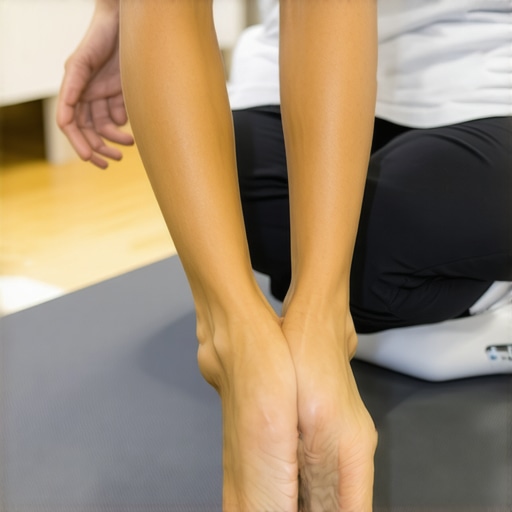
Avoid the Morning Stretch Trap
One of the most common ‘oops’ factors I see with advanced athletes and office workers alike is the immediate morning stretch. You wake up, your back feels stiff, and your instinct is to pull your knees to your chest or touch your toes. Stop. During the night, your spinal discs hydrate and swell slightly. Aggressive stretching the moment you roll out of bed puts massive hydraulic pressure on those discs. In fact, why your morning stretches might be making your back more sensitive is a lesson many learn only after a disc bulge flares up. Instead of stretching, you need movement that stabilizes. A study published in The Lancet highlighted that for low back pain, staying active is far superior to bed rest, yet people still fall into the trap of thinking ‘rest’ or ‘passive stretching’ is the only way to heal. I’ve found that why bed rest is the worst thing for acute back spasms is the hardest pill for most patients to swallow, but movement is the only way to flush out inflammatory markers.
Is your ‘No Pain, No Gain’ mentality actually a hidden injury?
In the world of sports rehab, we often see athletes who try to power through discomfort, but the truth about no pain no gain in sports rehab is that it usually leads to compensatory patterns that are harder to fix than the original injury. If you’re pushing through a ‘twinge’ in your lower back during squats, your brain will naturally shift the load to your hips or knees. This is where the hidden link between your ankles and lower back health comes into play. If your ankles are stiff, your low back often takes the hit during a deep movement. Have you ever fallen into the trap of thinking you could just ‘tough it out’ only to find yourself sidelined for a month? Let me know in the comments. We need to shift the focus from ‘fixing’ a single spot to strategic chiropractic solutions for long-term back health that look at the entire kinetic chain.The biggest hurdle isn’t getting out of pain; it’s staying out of it. Most people fall off the wagon the second the sharp stabs disappear, but that is exactly when the real work begins. If you want to stop the ‘revolving door’ of injury, you have to treat your body like a high-performance machine that requires a daily tune-up, not just an emergency repair. Incorporating essential tips for managing back pain through healthy lifestyle choices is the difference between a one-time fix and a permanent lifestyle shift. I personally spent years in a cycle of ‘rehab and relapse’ until I realized that my daily habits were undoing every adjustment I received. You have to be the primary architect of your own recovery.
Keep Your Progress Without Living at the Clinic
The goal of any high-quality clinical relationship should be to make you self-sufficient. I always tell my clients that if they are still coming to see me three times a week for the same ‘tight spot’ after six months, we’ve both failed. We want to move from acute care into the role of chiropractic care in effective sports injury recovery where we focus on performance and resilience. Maintenance is not about ‘waiting for it to hurt’; it’s about proactively clearing out the ‘gunk’ in your movement patterns. Dr. Stuart McGill, a world-renowned spine biomechanist and author of Back Mechanic, emphasizes that building ‘proximal stiffness’—a stable core—is the absolute prerequisite for safe, explosive movement in the limbs. Without that foundation, you are essentially trying to fire a cannon from a canoe.
The Tools That Actually Earned a Permanent Spot in My Gym Bag
I’ve tried every gadget on the market, from vibrating foam rollers to expensive percussion guns. Most of it is expensive noise. If you want results, you only need two things. First, you need to learn how to use a lacrosse ball for better thoracic mobility. This is the ultimate tool for ‘unsticking’ the vertebrae between your shoulder blades that get locked up from desk work. Second, you should master the best way to use a foam roller for it band relief, but not in the way you think—don’t just roll aimlessly; find the trigger points and breathe through the tension. These two tools, combined with boost your sports rehab journey with proven chiropractic strategies, will give you 80% of the results with 20% of the effort. 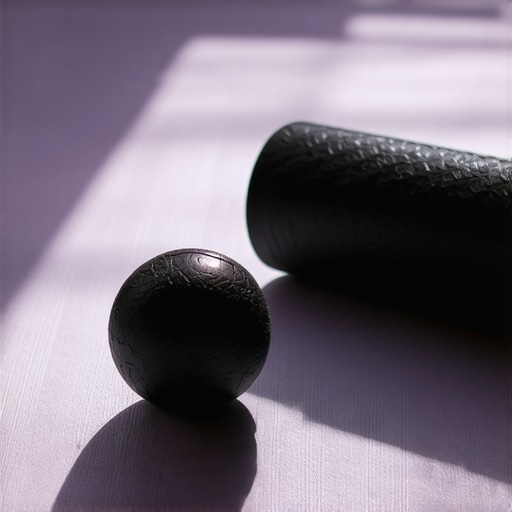
How do I maintain my spinal integrity over the long term?
Consistency beats intensity every single time. You don’t need a grueling hour-long mobility session; you need five minutes every single morning. This is about enhancing athletic performance with targeted chiropractic care by keeping the joints moving through their full range of motion. I predict that in the next five years, we will see a massive shift toward AI-driven wearable sensors that track your ‘spinal budget’ in real-time, alerting you before you hit a fatigue-induced injury. Until then, you are your own best sensor. If you feel that familiar ‘hitch’ in your gait or a dull ache in your lower back, don’t wait for a crisis. Address the movement pattern immediately. My challenge for you is simple: try the McGill ‘Big Three’ (the curl-up, side-bridge, and bird-dog) for just seven days straight. You will be shocked at how much more stable your spine feels during everyday tasks like lifting groceries or sitting at your desk.
Why Your Body Lies to You After the First Adjustment
I’ve seen it hundreds of times: a patient walks in with a 10/10 pain level, gets their first few sessions of chiropractic adjustments, and suddenly feels like a superhero. They think they’re cured. But here is the hard truth—pain is usually the last thing to show up and the first thing to leave. Just because the sharp sting is gone doesn’t mean your neural pathways have forgotten how to slouch. Real back pain relief comes from retraining the brain to move correctly long after the symptoms fade. I learned the hard way that stopping my rehab exercises the moment I felt ‘fine’ was the fastest way to end up back on the treatment table.
Three Items That Stay in My Daily Rotation
If you want to stop the cycle of stiffness, you don’t need a basement full of gadgets. I personally rely on these three resources to maintain my own spinal health. First, I always recommend Back Mechanic by Dr. Stuart McGill; it is the gold standard for understanding how your spine actually works under load. Second, never underestimate the power of a standard lacrosse ball for localized release; learning how to use a lacrosse ball for better thoracic mobility is a game-changer for desk-bound professionals. Finally, if you’re serious about strategic chiropractic solutions for long-term back health, invest in a quality monitor riser. Your eyes lead your head, and your head leads your spine. If you can’t see your work, your posture will suffer no matter how many adjustments you get.
Start Rewriting Your Movement Habits Today
Your body is incredibly resilient, but it is also a creature of habit. Every time you pull that mouse closer or drop your shoulders, you are casting a vote for a future without chronic discomfort. We often think of recovery as a destination, but it’s actually a daily practice. Whether you are looking for chiropractic techniques for faster recovery or just trying to survive an eight-hour shift, the power is in your micro-decisions. Don’t be afraid to experiment with your layout until it feels right. If you’re feeling stuck or the pain isn’t budging, feel free to contact us to discuss a personalized plan. Have you ever found a specific ergonomic shift that completely changed your pain levels? Tell me your story below.