
I remember landing in Heathrow after an eleven-hour slog. I stood up to grab my carry-on and felt like my left leg was suddenly two inches shorter than my right. It wasn’t just stiffness; my entire pelvis felt like it had been twisted into a pretzel by that cramped middle seat. I tried to walk it off, but by the time I hit the taxi stand, a sharp zing was traveling down my glute. I looked like I was limping away from a crime scene, not starting a vacation. If you’ve ever felt like your body was literally crooked after a trip, you aren’t alone—and you aren’t imagining things.
Stop Walking Like a Crab After You Land
Sitting for hours in a pressurized cabin does something weird to our body mechanics. Your hip flexors tighten up like overwound springs, and your glutes—the muscles that should be holding you upright—basically go on strike. This creates a functional leg length discrepancy that can throw your whole spine out of whack. Early in my journey, I made the classic mistake of thinking I could just stretch it out with the deepest lunge possible the second I checked into my hotel. I ended up straining my psoas because I was tugging on a joint that was already stuck and irritated. It was a painful lesson in why we need to move smarter, not just harder. We often see this same pattern when your sciatica gets worse when you drive long distances, where the compression of the seat meets the immobility of the trip. Today, I am going to show you how to gently coax your pelvis back into alignment without making things worse.
Is trying to fix this yourself actually safe?
I hear this all the time: Won’t I hurt myself if I try to move my own hips? It is a fair fear. You should absolutely stop cracking your own neck for relief, but the pelvis is different. We are not talking about forceful cracks here. We are talking about using your own muscles to pull the bones back into their proper slots. According to the Journal of Manipulative and Physiological Therapeutics, prolonged sitting leads to significant increases in pelvic tilt and muscle stiffness, which is why chiropractic adjustments can alleviate chronic back pain so effectively by restoring lost mobility. But between visits, you need a strategy to survive the travel days. Have you ever felt that weird shift in your hips after a flight? Drop a comment below if you have ever felt like one leg was longer than the other after a long trip.
Why your hips hate the economy cabin
The way we sit on planes is a recipe for disaster. We are often slightly rotated to one side, perhaps leaning toward an armrest or twisting to see a screen. Combine that with the fact that your ankles feel stiff after a long flight, and you have a kinetic chain that is failing from the ground up. If you do not address the foundation, you are just waiting for a flare-up. Learning the best way to sit on a plane to avoid sciatica flares is half the battle, but once the damage is done, we have to talk about recalibrating your center of gravity through targeted movement.Instead of fighting against the tightness, we need to treat your pelvis like a jammed drawer. If you yank it, it just gets stuck harder; you have to wiggle it back into the right track. My first time in Tokyo, I thought I could brute-force my way out of a crooked hip by doing aggressive lunges in my tiny hotel room. I ended up limping through the Shibuya Crossing with a psoas that felt like a guitar string about to snap. What I should have done—and what I do now—is use an isometric reset. This technique uses your own muscle contractions to nudge the bones back where they belong without the trauma of a heavy stretch.
Use Your Own Muscles to Pull the Pelvis Home
To start the recalibration, find a flat surface. Your bed might be too soft, so the floor is your best bet. Lie on your back with your knees bent and feet flat. This is where we perform a ‘muscle energy technique.’ Place one hand on the front of your right thigh and the other on the back of your left thigh. Simultaneously, try to pull your right knee toward your chest while pushing your left foot away, but use your hands to resist the movement so nothing actually moves. It is a ghost-struggle. Hold this tension for five seconds, then switch sides. This simple push-pull action creates a shearing force that helps the sacroiliac joint find its center. It is exactly why your chiropractor checks your leg length every visit; they are looking for that subtle shift that this exercise addresses. 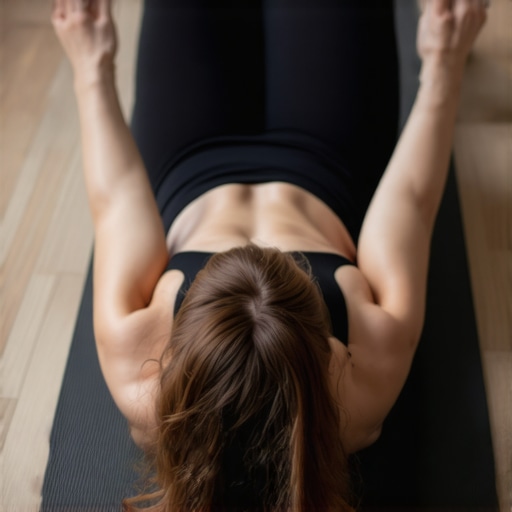
Stop Tugging and Start Pushing Instead
After the reset, we have to wake up the muscles that fell asleep over the Atlantic. Your glutes are the primary stabilizers of the pelvis, but after eight hours of sitting, they are functionally dormant. Perform ten slow, controlled glute bridges. Focus on pushing through your heels and keeping your belt line level. If you feel one side of your hip dipping, your alignment is still off. This is a crucial part of strategic chiropractic solutions for long-term back health because it moves beyond temporary relief and into active stabilization. If you skip this, your pelvis will just slide back into that twisted, ‘airplane seat’ posture the moment you pick up your suitcase.
Check the Foundations Before You Rebuild the House
We often forget that the pelvis sits on top of two columns: your legs. If your feet and ankles are locked up, your hips have no chance of staying level. Because your ankles feel stiff after a long flight, they transmit every ounce of impact directly into your knees and lower back. Spend two minutes doing slow ankle circles and calf pumps. Think of it as clearing the debris from the tracks before you try to run the train. There is a hidden link between your ankles and lower back health that most travelers ignore. Once the ankles are moving, you can move on to the best way to stretch your psoas without hurting your spine, which involves a half-kneeling position with a tucked pelvis—never a deep, arched-back lunge. This sequence ensures that how spinal alignment affects your balance and stability works in your favor as you head out to explore a new city. When you understand why your shoes are wearing out unevenly, you start to see that the ‘short leg’ feeling isn’t a permanent deformity, but a temporary mechanical glitch you can fix with the right moves.Let’s dig deeper into why that ‘crooked’ feeling persists even after you’ve done your hotel room yoga. The biggest myth I see in sports rehab is the idea that if something feels tight, you must pull on it until it yields. This ‘no-pain-no-gain’ mentality is exactly the truth about no pain no gain in sports rehab—it usually leads to more inflammation, not less. When your pelvis shifts after a long-haul flight, your brain is actually ‘braking’ your hip to protect the spine. If you go into a deep, aggressive lunge, your nervous system perceives that as a threat and tightens the muscle even further. This is why your hip flexors are still tight after a year of stretching; you’re fighting your own biology rather than working with it.
Why does the ‘short leg’ sensation keep coming back?
Many travelers find that they feel great for ten minutes after a stretch, only for the limp to return the moment they pick up their bags. This happens because of a lack of joint centration. A study published in the Journal of Bodywork and Movement Therapies suggests that muscle length is often secondary to how the joint ‘seats’ within the socket. Without the proper science behind chiropractic adjustments for back pain relief, the joint remains slightly off-axis. Your brain detects this instability and re-engages the protective tension to prevent a more serious injury. You aren’t dealing with a ‘short’ muscle; you’re dealing with a software glitch in your movement patterns that requires a reset, not just a tug. 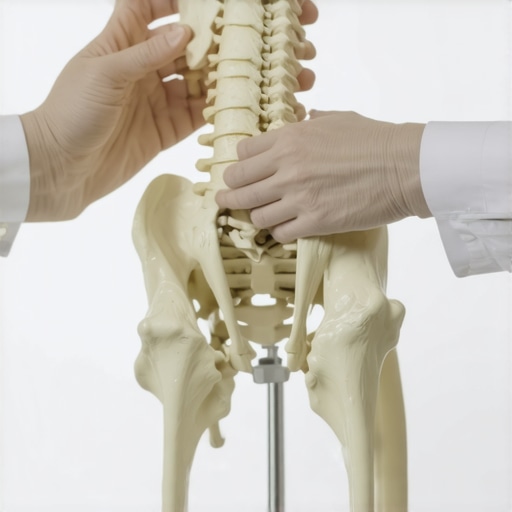
The ice pack trap you should avoid
One major trap to avoid is reaching for the ice pack the moment you feel that post-flight ache. While it feels like the logical choice to ‘numb’ the pain, why icing your lower back might be slowing down recovery is a conversation more people need to have. Ice can actually increase muscle guarding and slow down the blood flow needed to flush out the metabolic waste that accumulated while you were stagnant in seat 24B. Furthermore, if you are also dealing with rounded shoulders from years of desk work, your entire kinetic chain is already under tension; adding cold to a ‘locked’ system just makes the tissues more brittle. Instead of freezing the area, focus on gentle, active heat and mobility to signal to your brain that it is safe to let go of that protective ‘crab walk’ posture. Have you ever fallen into this trap of over-stretching only to feel tighter the next day? Let me know in the comments.
The Two Simple Tools That Live in My Carry-On
After years of traveling and dealing with the inevitable ‘airplane hip,’ I have narrowed my recovery kit down to two items that do 90% of the heavy lifting. The first is a standard lacrosse ball. I prefer this over a bulky foam roller because it allows for specific trigger point therapy. While many people know how to use a lacrosse ball for better thoracic mobility, it is equally transformative for the glute medius—the muscle that often locks up to protect your spine after a flight. By pinning the ball between your hip and a wall, you can manually release the tension that causes that ‘short leg’ sensation. The second tool is a light resistance band. Using it for side-steps or monster walks immediately following the isometric reset we discussed earlier helps ‘glue’ your pelvis back into its proper alignment. This is one of those essential tips for managing back pain through healthy lifestyle choices that separates the people who recover in a day from those who are sore for a week. I personally use these tools the moment I get into my hotel room—no excuses. 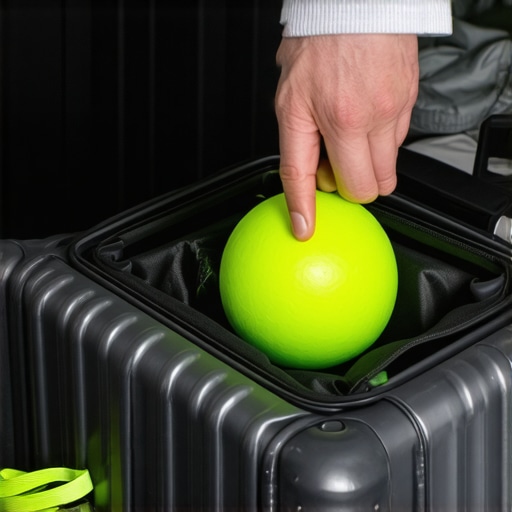
How do I keep my hips from locking up during a busy week?
Maintenance is not about doing a two-hour workout; it is about ‘spine hygiene.’ Dr. Stuart McGill, a leading expert in spine biomechanics often cited in the Journal of Back and Musculoskeletal Rehabilitation, emphasizes that the endurance of your stabilizing muscles is far more important than their raw strength. To maintain balance, I perform ‘pelvic clocks’ every morning. Imagine your pelvis is a clock face; you gently tilt it toward 12 o’clock (flattening your back) and then 6 o’clock (arching it). This micro-movement keeps the sacroiliac joint lubricated. When you combine this with strategic chiropractic solutions for long-term back health, you are essentially teaching your nervous system that it is safe to move through a full range of motion. If you are a high-performer or an athlete, these small habits revolutionize your rehab chiropractic techniques for faster recovery because they prevent the ‘software glitches’ from becoming permanent hardware issues.
Why AI and Wearables are the Next Frontier for Back Health
Looking ahead, I predict we are going to see a massive shift toward wearable bio-feedback. We already have watches that track heart rate, but the next step is haptic feedback sensors that alert you when your pelvic tilt has shifted beyond a healthy range during your commute. Instead of waiting for the pain to start, your phone will buzz, reminding you to engage your core or adjust your seat. This proactive approach will change the science behind chiropractic adjustments for back pain relief by providing your doctor with real-time data on how you move when you aren’t in the clinic. While a foam roller is great, knowing when you are starting to tighten up is even better. Even the best way to use a foam roller for IT band relief is reactive; the future is purely preventative. I want you to try this: the next time you finish a flight or a long drive, spend exactly 90 seconds on a lacrosse ball pinpointing your glutes before you even unpack your bags. It is the single most effective way to stop a flare-up before it starts.
The biggest lie about stretching your way out of travel stiffness
After years of hobbling off planes, I realized the hardest lesson of all: you cannot stretch a joint that is neurologically ‘locked.’ When you feel like one leg is shorter than the other, it is usually because your nervous system has pulled the emergency brake on your pelvis. Here are the three most important lightbulb moments I had during my own recovery journey. First, symmetry is a myth but stability is mandatory. Do not obsess over being perfectly level; focus on whether your hips can move through their full range without a ‘catch.’ Second, the ‘limp’ you feel is often a software glitch, not a bone problem, which is why boost your sports rehab journey with proven chiropractic strategies focus so heavily on the brain-body connection. Finally, consistency beats intensity every time—ninety seconds of gentle resets are more effective than thirty minutes of aggressive, painful lunging.
The small gear that keeps my hips level on three continents
I never leave home without a few specific tools because they are the difference between a ruined vacation and a productive trip. My toolkit includes a high-density lacrosse ball for releasing the glute medius and a light-tension resistance band for activating the lateral hip stabilizers once I land. I also swear by a high-quality electrolyte powder; dehydration makes your spinal discs more prone to compression, making it harder for chiropractic adjustments to alleviate chronic back pain if you aren’t hydrated from the inside out. I trust these tools because they allow for ‘micro-adjustments’ on the go, keeping the foundation stable until I can get professional care. Using these is one of the most essential tips for managing back pain through healthy lifestyle choices for any frequent traveler.
#IMAGE_PLACEHOLDER_E#
Stop letting the middle seat dictate your movement
You don’t have to accept ‘post-flight crookedness’ as an inevitable part of exploring the world. By using the muscle energy techniques and active resets we’ve discussed, you take the power back from that cramped economy seat. While these DIY fixes are incredible for immediate relief, remember that unlocking back pain relief expert chiropractic adjustments that work is the best way to address the deep-seated mechanical issues that travel merely exposes. Reclaiming your mobility starts the moment you stand up to exit the plane. Don’t wait for the pain to become a permanent souvenir of your trip—start your reset before you even reach the baggage claim. Have you ever felt that weird shift in your hips after a flight, or do you have a specific move that saves your back when you land? Let me know your best travel recovery tips in the comments below!